By YardHatch · Updated
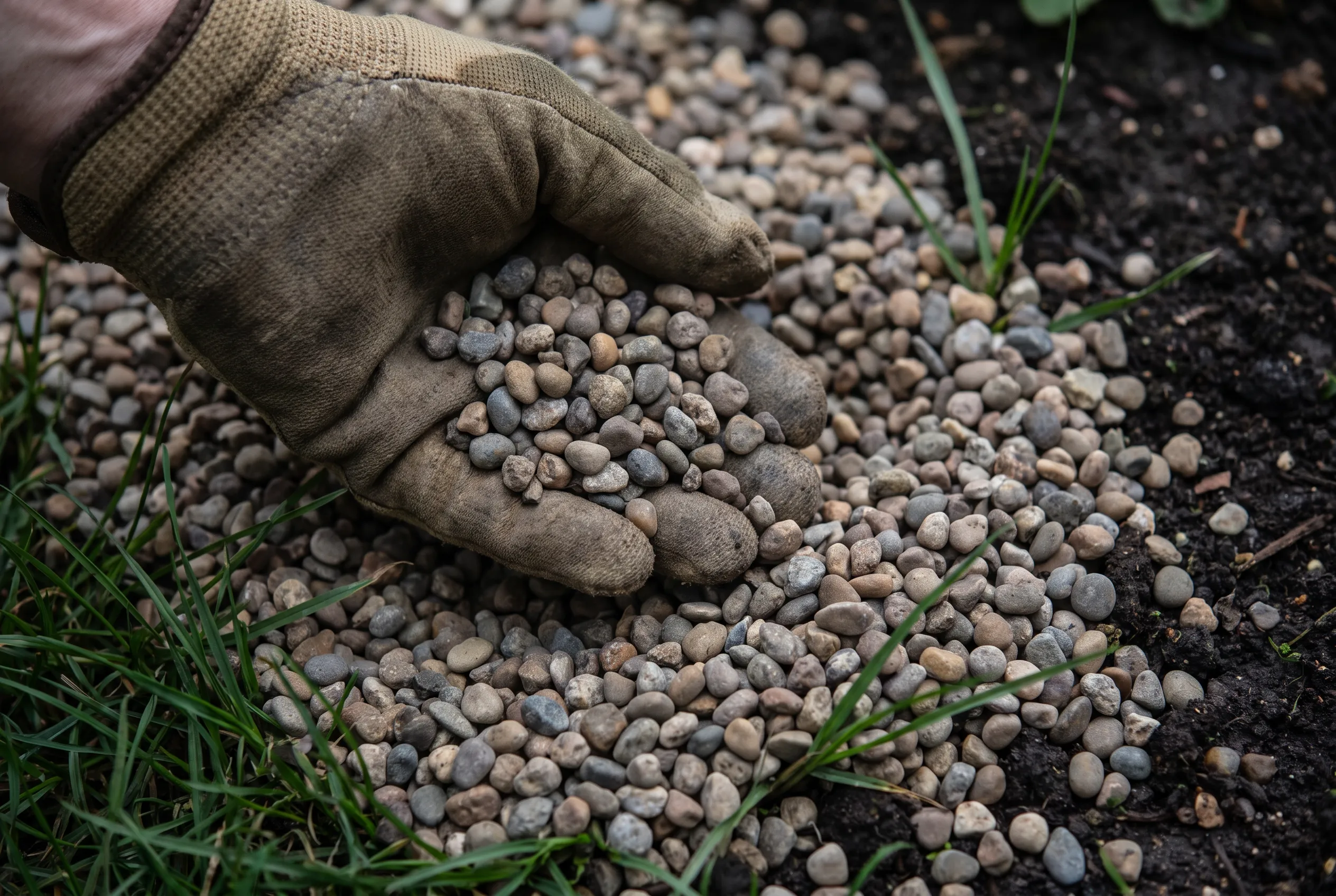
Rounded pea gravel moves underfoot more easily; angular crushed stone tends to interlock.
How to plan it
- Decide whether the area is decorative, a path, or a structural layer
- Ask the supplier for the actual size and gradation
- Estimate volume from measured area and desired depth
A practical planning example
A 30 × 3 ft path at an assumed 2-inch surface layer needs 15 cu ft. That geometry is unchanged by the decorative aggregate choice, but the base specification, edging and walking behavior may differ. Ask for the exact gradation and intended application, and keep the structural base as a separate order line.
Examples explain the decision or calculation. Assumed quantities and rates are not installation specifications.
Turn this into a quantity
Record your site measurements first. Then use a calculator with the depth, application rate, or coverage from the actual material specification.
Open gravel calculatorSource and limits
Concrete Masonry & Hardscapes Association: Paver technical guidance. Local conditions and manufacturer guidance may call for different materials or installation details.