By YardHatch · Updated
Drip and spray irrigation deliver water differently; plants, soil, pressure, and maintenance determine the better fit.
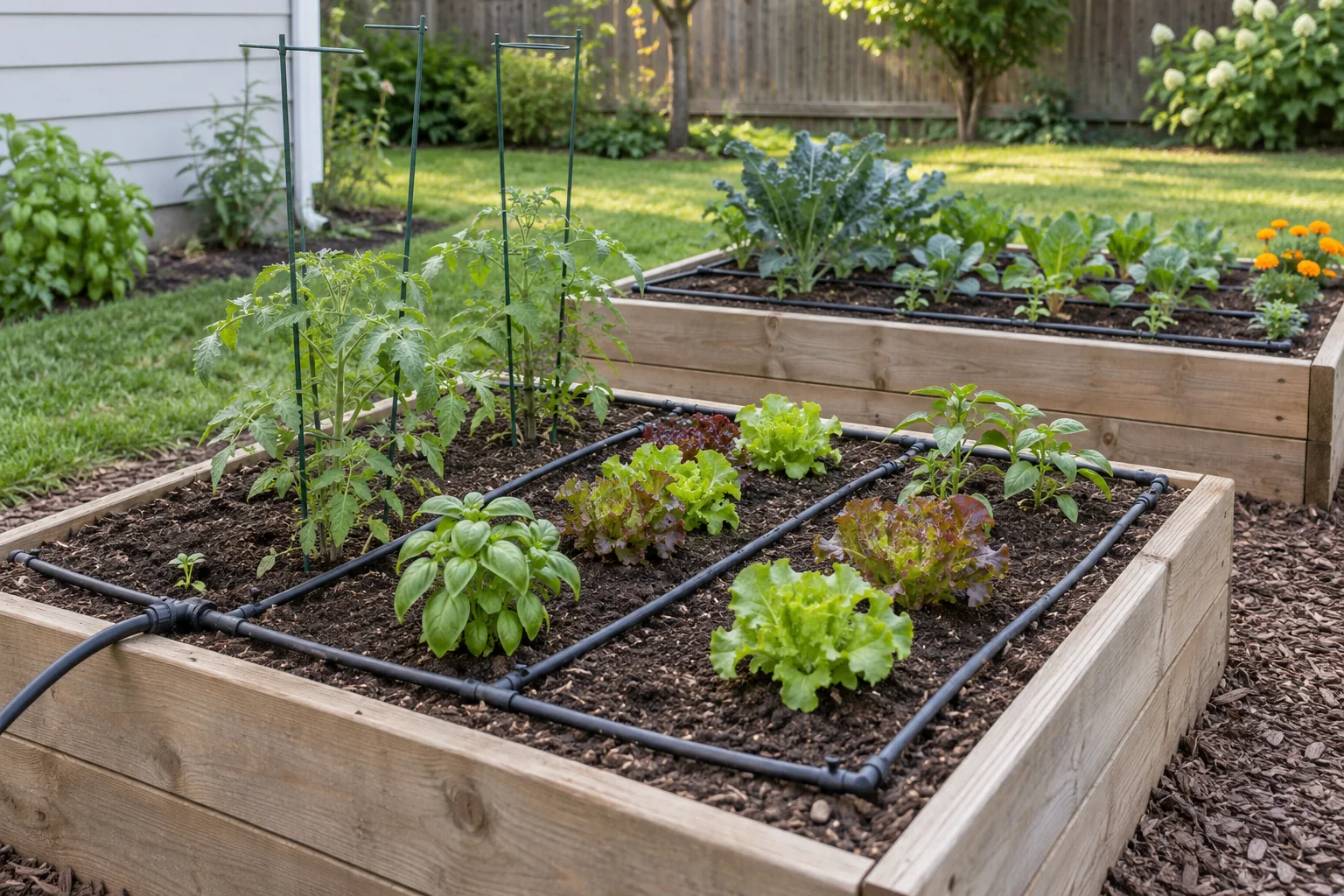
How to plan it
- Map planting beds and turf separately
- Compare emitter or head specifications for coverage and flow
- Plan filtration, pressure regulation, and zones where required
A practical planning example
Separate planted beds from turf on the sketch. For drip, record row length, emitter spacing and rated flow; for sprinklers, record rated coverage, pressure and layout. Four 20 ft drip rows require 80 ft of row tubing before connections. That tubing quantity does not demonstrate that the source can supply the emitter flow at the required pressure.
Examples explain the decision or calculation. Assumed quantities and rates are not installation specifications.
Turn this into a quantity
Record your site measurements first. Then use a calculator with the depth, application rate, or coverage from the actual material specification.
Open drip irrigation calculatorSource and limits
US EPA WaterSense: Water Budget Tool. Local conditions and manufacturer guidance may call for different materials or installation details.