By YardHatch · Updated
A zone groups devices that can operate together within available water pressure and flow.
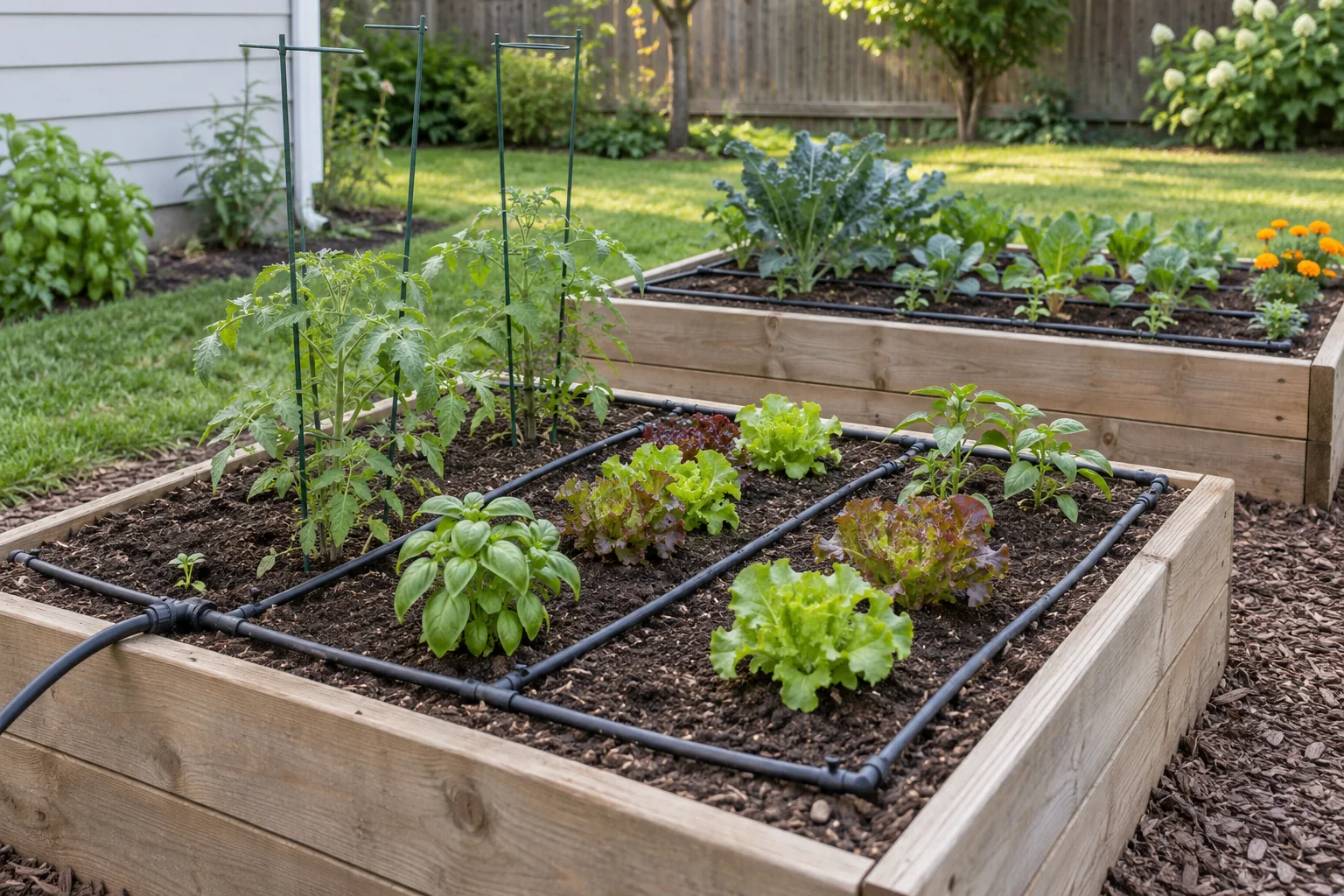
How to plan it
- List each device’s rated flow and pressure
- Separate dissimilar plant and sprinkler needs
- Check supply capacity and controller limits before assigning a zone
A practical planning example
Twenty emitters rated at 1 gallon per hour have a nominal combined demand of 20 gallons per hour, or about 0.33 gallons per minute. Add every operating device and compare with measured supply at the required pressure. Tubing friction, elevation and manufacturer limits still matter; a summed flow calculation is only one check in the zone design.
Examples explain the decision or calculation. Assumed quantities and rates are not installation specifications.
Turn this into a quantity
Record your site measurements first. Then use a calculator with the depth, application rate, or coverage from the actual material specification.
Open drip irrigation calculatorSource and limits
US EPA WaterSense: Water Budget Tool. Local conditions and manufacturer guidance may call for different materials or installation details.