By YardHatch · Updated
An irregular lawn is easier to estimate as several simple pieces than as one guessed outline.
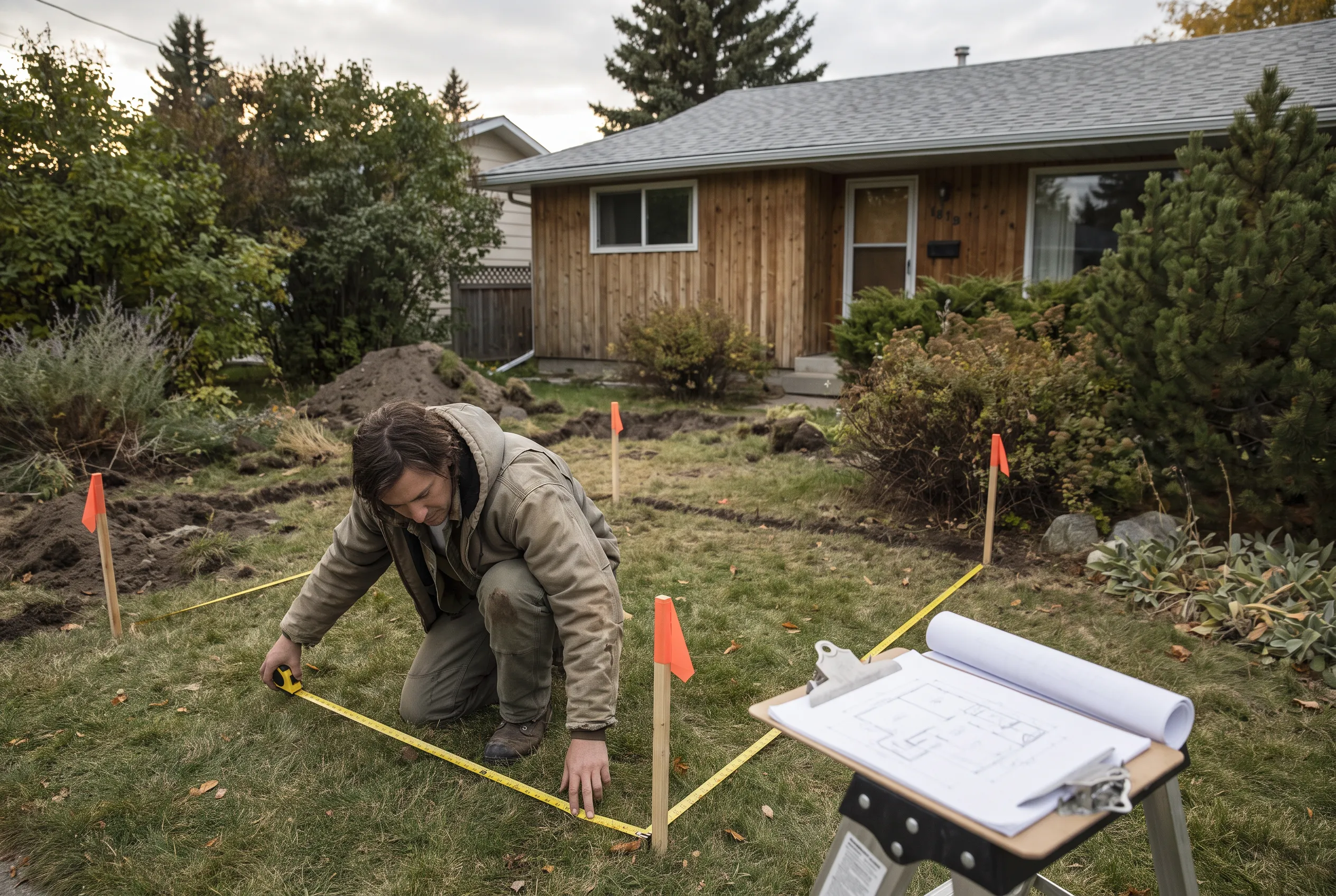
How to plan it
- Draw a rough plan and label every dimension
- Divide the outline into nonoverlapping simple shapes
- Calculate each piece and add the totals
A practical planning example
Divide an L-shaped bed into two nonoverlapping rectangles. A 12 × 8 ft section plus a 6 × 4 ft section totals 120 sq ft. A diagonal boundary can be approximated with a triangle using perpendicular height, not the length of its sloping side. For curved edges, smaller measured sections improve the approximation.
Examples explain the decision or calculation. Assumed quantities and rates are not installation specifications.
Turn this into a quantity
Record your site measurements first. Then use a calculator with the depth, application rate, or coverage from the actual material specification.
Open Multi-zone area plannerSource and limits
University of Maryland Extension: Determining the area/size of a practice. Local conditions and manufacturer guidance may call for different materials or installation details.