By YardHatch · Published · Updated
Compare the delivered total for the same product and installed volume. A low price per yard can lose its advantage when a delivery minimum exceeds the amount your bed needs.
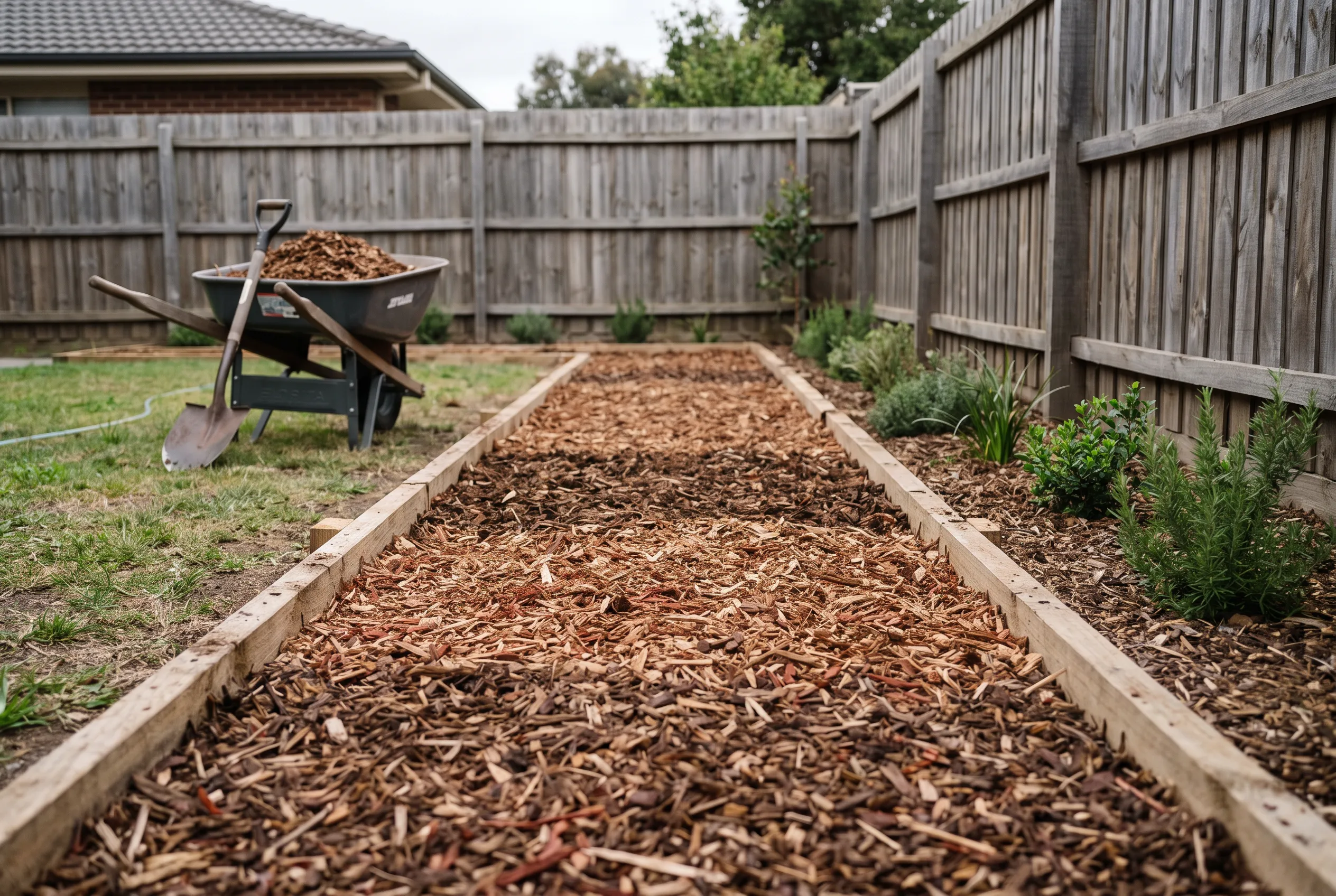
Start with uncovered area and new depth
Measure only the bed that will receive mulch. Subtract hard surfaces and plants occupying substantial space, and check the existing layer before choosing the additional depth. The examples below use 3 inches solely to demonstrate volume; choose the appropriate depth for your planting and material.
Convert before comparing prices
Cubic yards = square feet × depth in inches ÷ 324. For 2 cubic foot bags, divide cubic feet by 2 and round up after calculating the entire order. Rounding every small section separately can overstate the bag count.
| Bed area at 3 in | Calculated volume | Whole 2 cu ft bags | Bag surplus |
|---|---|---|---|
| 100 sq ft | 0.926 cu yd / 25 cu ft | 13 | 1 cu ft |
| 300 sq ft | 2.778 cu yd / 75 cu ft | 38 | 1 cu ft |
| 600 sq ft | 5.556 cu yd / 150 cu ft | 75 | 0 cu ft |
Treat access as part of the quote
Ask where the truck can unload and how you will move the pile. Confirm that bagged and bulk products have the same composition and intended use. Include delivery, pallet deposits, tax, equipment hire and any extra trips. A cheaper product is not a like-for-like saving if it is a different material.
Make the decision with your own prices
Enter both offers in the quote comparison tool. If a bulk supplier has a minimum, compare the actual bill and the delivered surplus rather than multiplying the needed volume by an advertised unit price. Keep this surplus separate from any deliberate installation allowance.
Make it your own estimate
These are modeled calculations. Actual products, installation conditions and supplier requirements control your order.
Open the related toolContinue with the project or reference · Compare supplier quotes
Sources and method
University of Minnesota Extension: Mulching for soil and garden health provides the relevant background guidance. Worked tables are YardHatch arithmetic using the visible assumptions, not source price data or field observations.