By YardHatch · Published · Updated
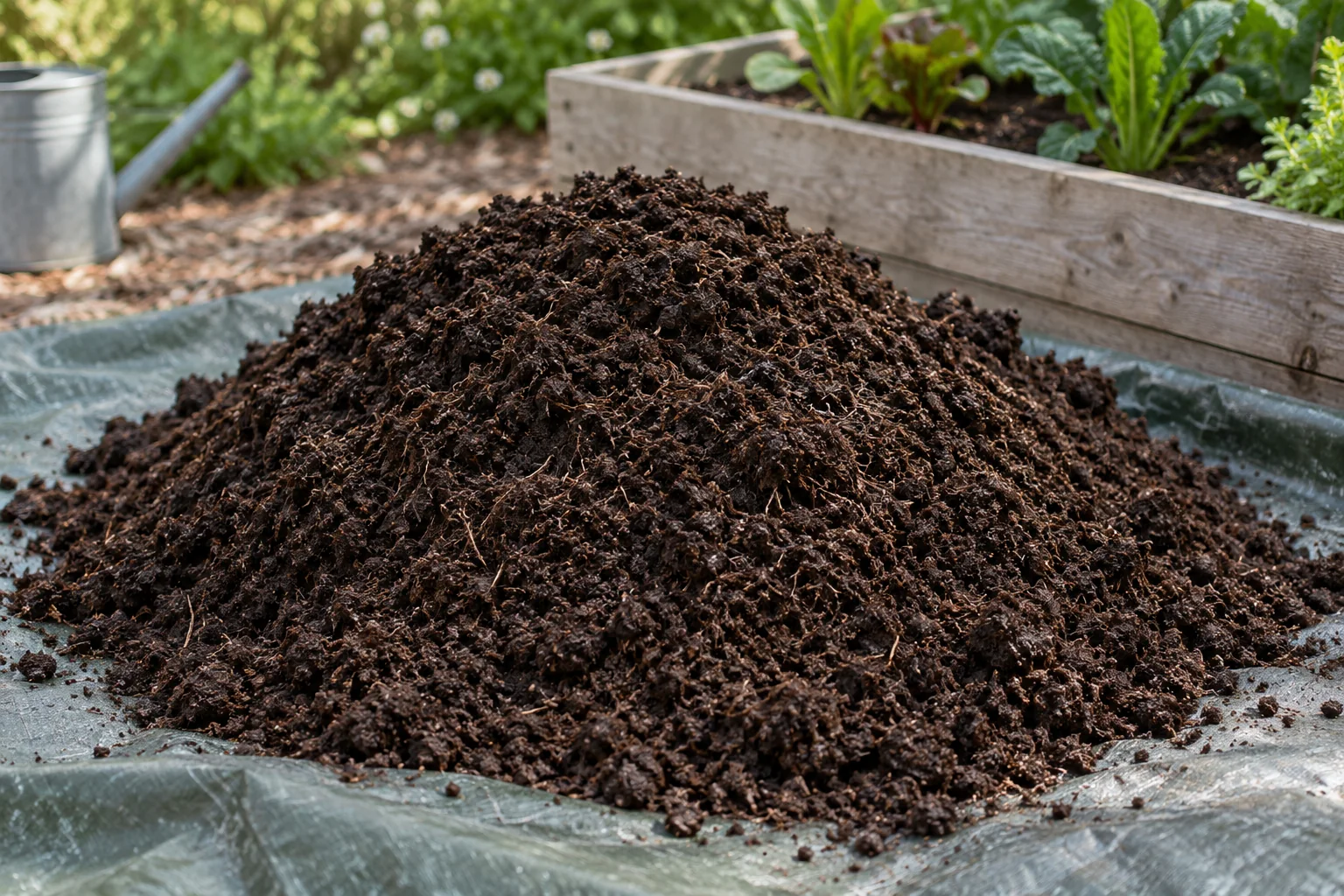
A compost order starts with the area and depth you have chosen for a specific purpose. The calculation tells you the volume of that layer; it does not tell you whether that depth or product suits your soil.
Clarify what the bed needs
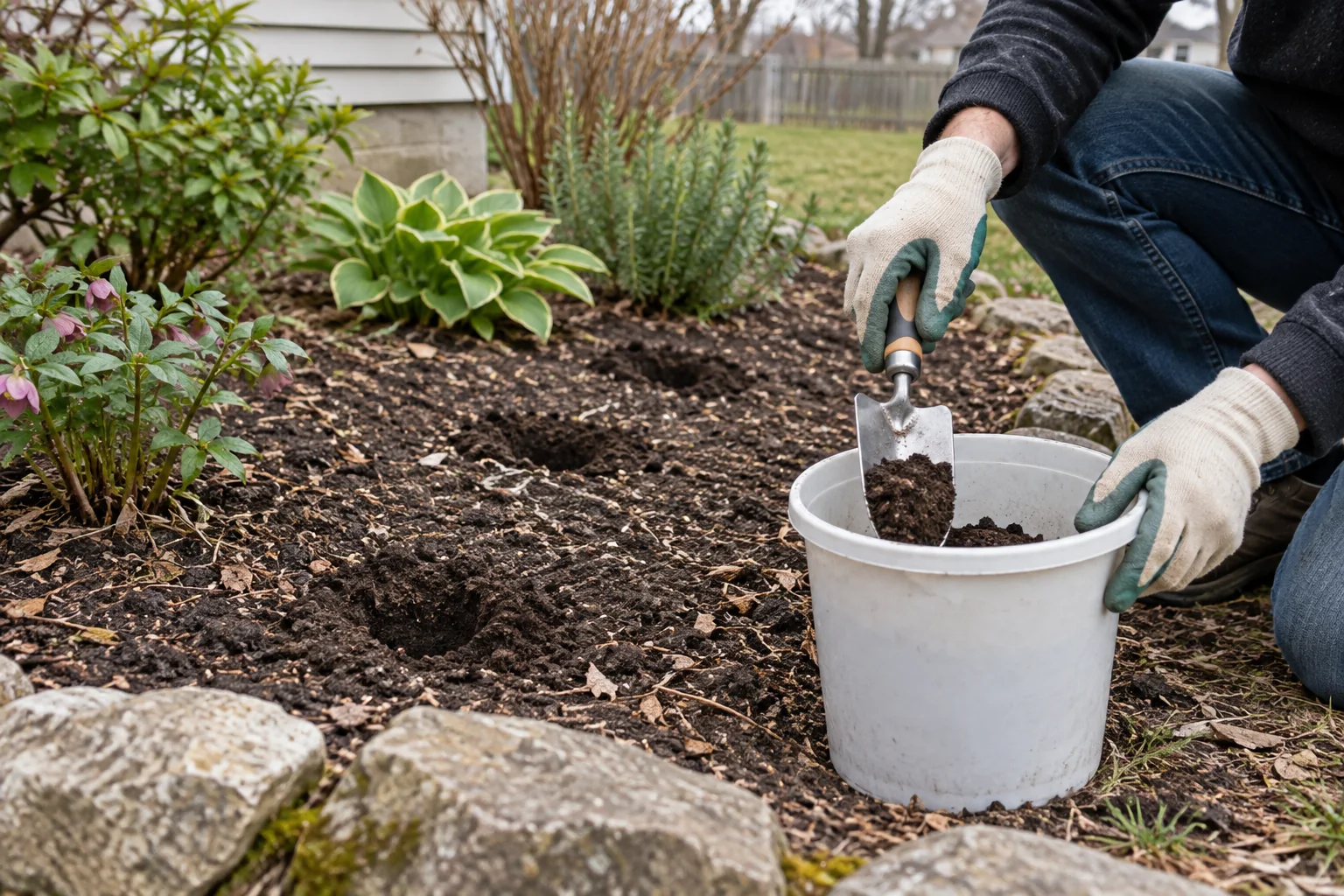
Compost is a soil amendment, not a universal replacement for topsoil. Consider the existing soil, planting purpose and drainage. A soil test and local extension advice can help identify whether amendments are useful and how to manage them. Product characteristics vary, so check the blend and intended use before ordering.
Measure the surface at the planned depth
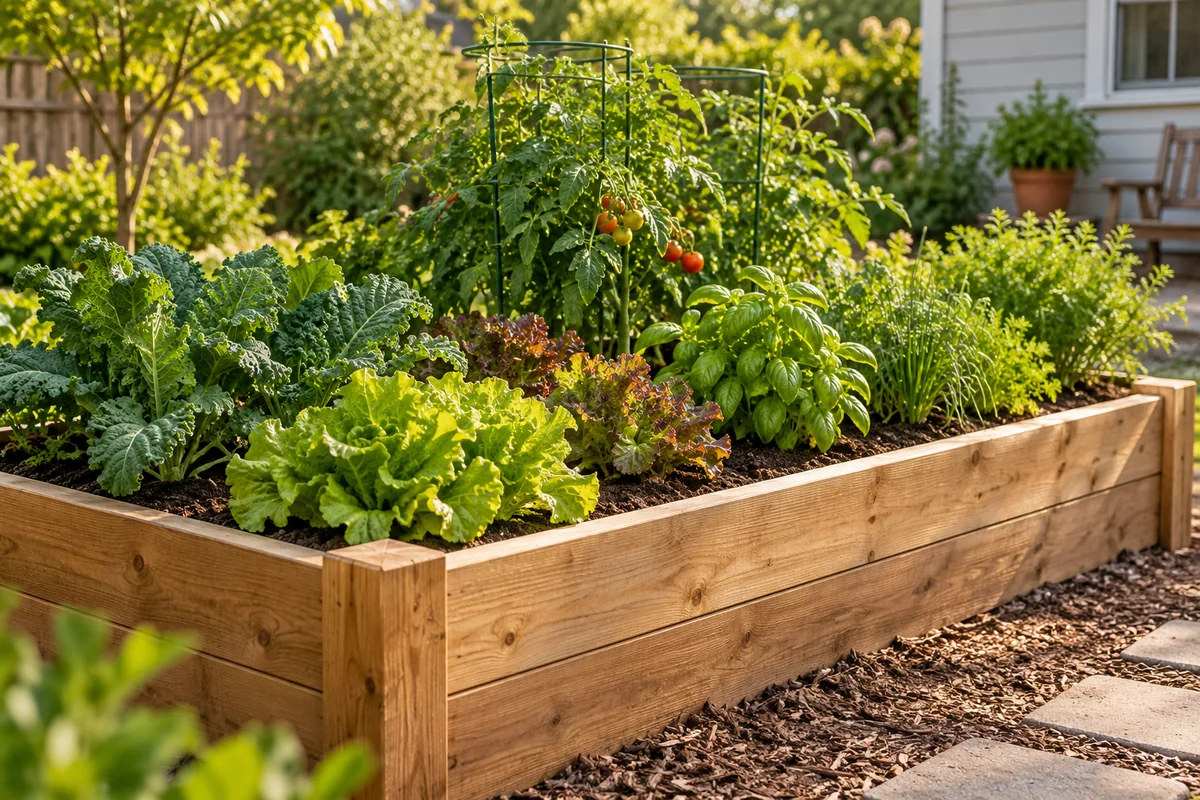
For this modeled example, three rectangular beds each have 4 by 8 feet of surface, for a total of 96 square feet. Use the inside dimensions of raised frames and subtract areas that will not receive the material. If beds require different depths or products, calculate them separately rather than applying a single average.
How depth changes the same 96-square-foot order
All rates, package sizes and quantities are hypothetical examples.
| Modeled layer depth | Volume | Whole 1.5 cu ft bags |
|---|---|---|
| 0.5 in | 4 cu ft / 0.148 cu yd | 3 bags, supplying 4.5 cu ft |
| 1 in | 8 cu ft / 0.296 cu yd | 6 bags, supplying 9 cu ft |
| 2 in | 16 cu ft / 0.593 cu yd | 11 bags, supplying 16.5 cu ft |
Convert the layer to a purchase volume
At an illustrative 1-inch layer, 96 × 1 ÷ 12 = 8 cubic feet, or about 0.296 cubic yards. At 2 inches the same area would need 16 cubic feet, or about 0.593 cubic yards. These depths are mathematical scenarios, not recommendations. Use the rate and incorporation method appropriate to your soil and selected guidance.
Compare bags and bulk by usable volume
If the product is sold in hypothetical 1.5-cubic-foot bags, the 8-cubic-foot example needs six whole bags, providing 9 cubic feet. A bulk quote may have a minimum load that exceeds the calculated amount. Compare equivalent products and include delivery, tax, and the effort of moving the material; weight cannot be converted to volume reliably without product-specific density.
Save the assumptions with the order
Record the net area, intended purpose, depth, product specification and supplier’s unit. If several beds share the same product, combine their calculated volumes before rounding to whole bags. Keep a separate line for soil or mulch, and revise the estimate when the design changes instead of treating all layers as one material.
Distinguish a top layer from a raised-bed mix
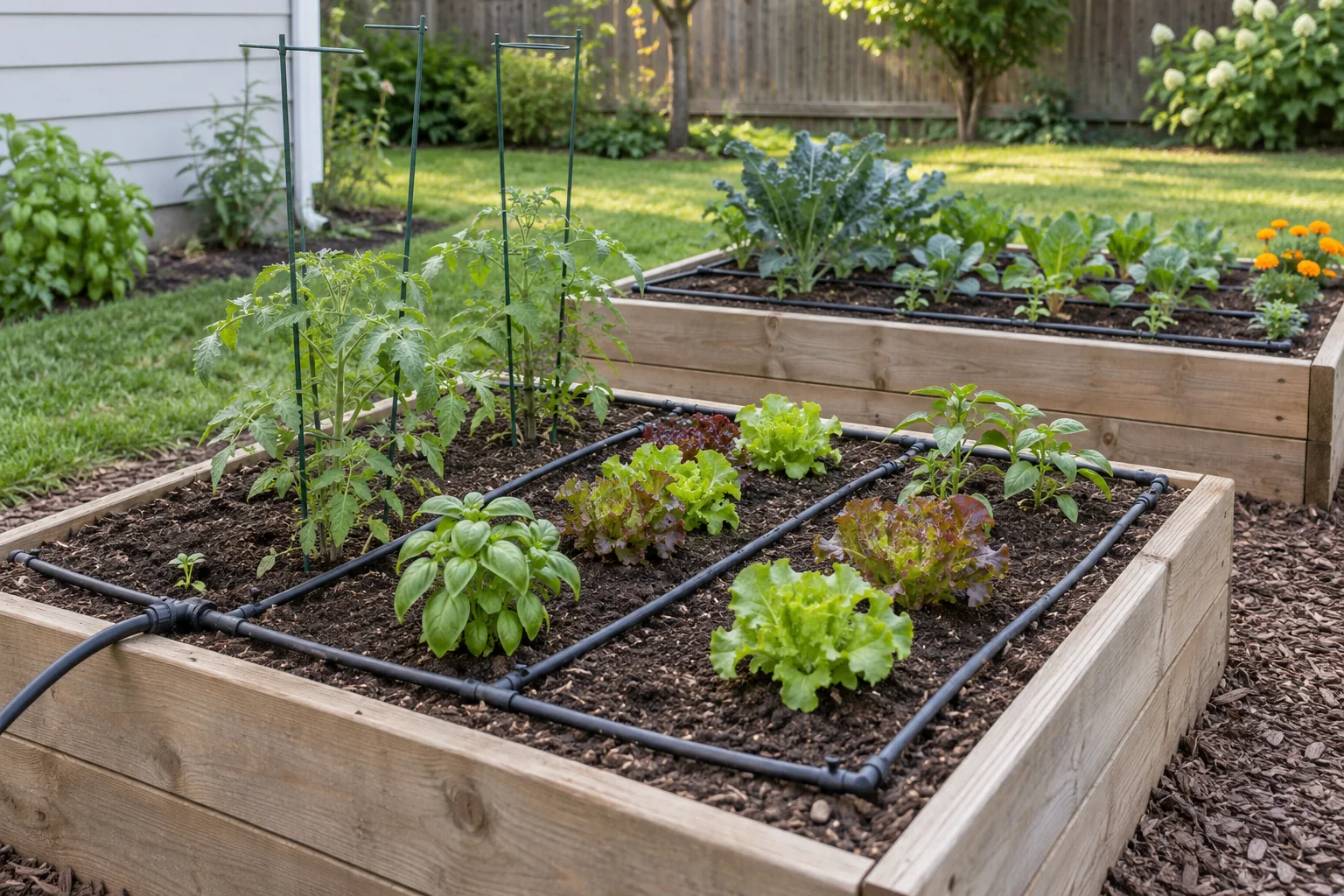
A one-inch layer over the bed surface and a whole bed filled with a compost-containing blend are different calculations. The first uses surface area times layer depth. For a blend, first calculate the usable interior volume, then apply the actual recipe or product proportion chosen for that bed. Do not multiply by a blend percentage and then add a full top layer unless the plan calls for both. Maryland Extension discusses media choices and emphasizes assessing existing soil and drainage.
Adjust for a different bed shape
The three-bed example assumes equal rectangles. For irregular beds, divide the surface into non-overlapping shapes and total the calculated areas. A triangular section measuring 6 feet along its base and 4 feet high has 6 × 4 ÷ 2 = 12 square feet. At the modeled 1-inch depth, it adds 1 cubic foot. If that section receives the same product, combine it with the 8-cubic-foot example before rounding: 9 cubic feet requires six 1.5-cubic-foot bags.
Ask about compost quality and application
Ask the supplier what the product contains, whether it is finished, its intended use and the selling volume. Follow product and local extension guidance for incorporation or surface use; compost materials and nutrient levels differ. Soil testing can inform amendment decisions, and more compost is not automatically beneficial. When buying for vegetables or other food crops, use reliable guidance on compost sources and food safety rather than assuming every material is interchangeable.
Before you buy
- Intended use and soil condition are clear.
- Inside dimensions exclude unfilled areas.
- Depth is chosen from relevant guidance, not copied from the example.
- Bag volume, bulk minimum and delivery charges are compared.
Questions and answers
Can I use the same depth for every bed?
Not necessarily. Depth and whether to incorporate compost depend on the soil, intended use and local recommendations. The table shows only arithmetic at different depths.
How many cubic feet are in a cubic yard?
There are 27 cubic feet in one cubic yard. Divide your calculated cubic feet by 27 to express the same volume in cubic yards.
Can I use bag weight instead of volume?
Only if you know the density of the actual product under the quoted conditions. Moisture and composition can change weight, so a bag’s pounds alone do not establish its volume.
Do I round each bed up to full bags?
Combine quantities first when the product is the same and the material can be shared. Round different products separately.
Make it your own estimate
These are modeled calculations. Actual products, installation conditions and supplier requirements control your order.
Open the related toolContinue with the project or reference · Compare supplier quotes
Sources and method
University of Minnesota Extension: Soil testing for lawns and gardens · University of Maryland Extension: What compost should I use? · University of Maryland Extension: Soil to fill raised beds
The references provide background, not a tested YardHatch installation or supplier quote. Worked quantities use the stated assumptions and are not product recommendations.