By YardHatch · Published · Updated
Request the same soil specification and delivered quantity from each supplier. Compare the full invoice, including delivery and minimum loads; “a yard of topsoil” alone is not enough to compare quality or cost.
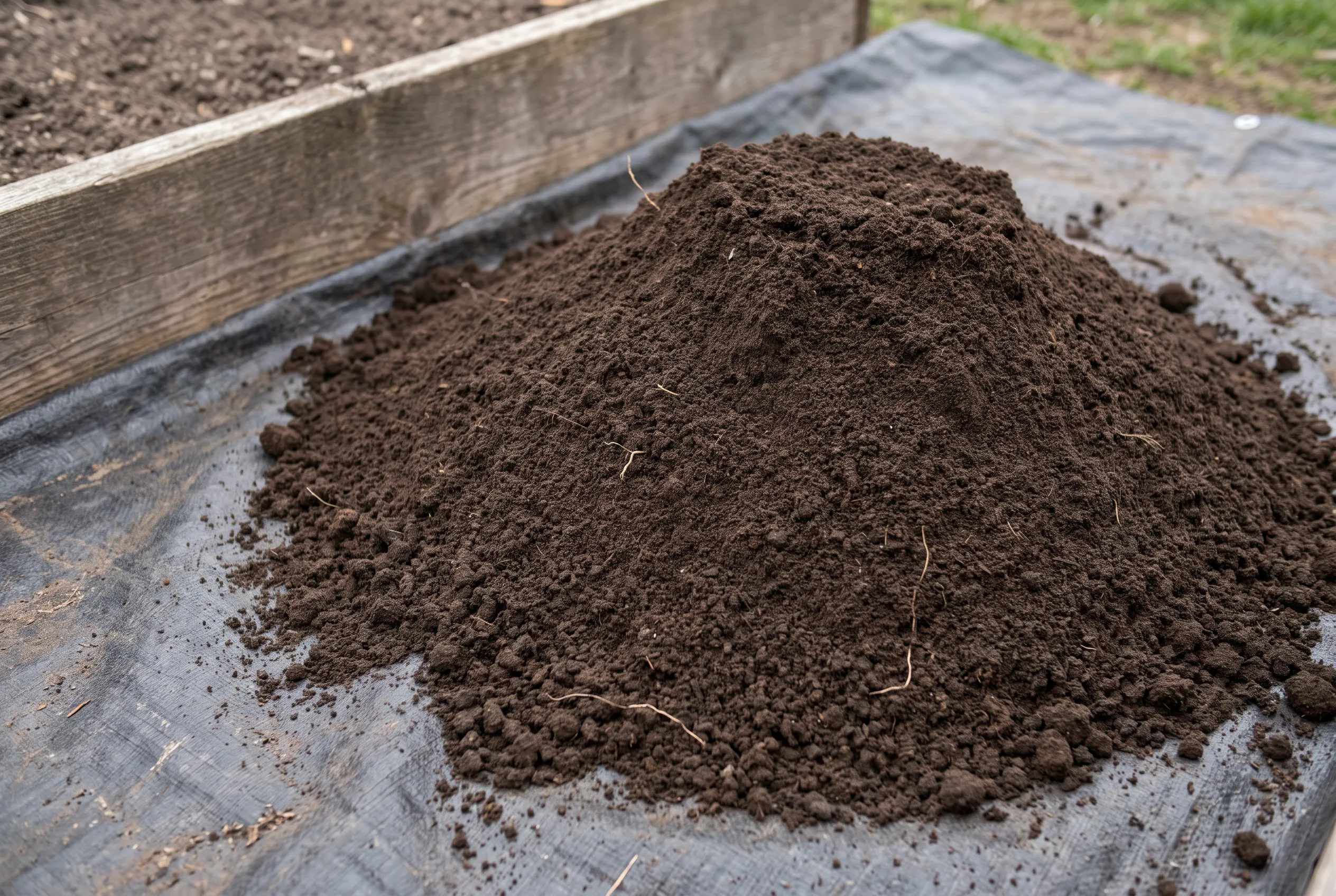
Describe the job first
Tell the supplier the intended use, existing soil condition and required product. A screened product describes processing, not proof that the soil meets your planting needs. Use a soil test and local guidance where you are changing growing conditions.
Calculate the layer
A 240 sq ft area receiving a modeled 2 inch layer needs 480 ÷ 324 = 1.481 cubic yards. At 1 cubic foot per bag, the arithmetic is 40 bags. The depth is an example, not a soil prescription.
| Quote field | Supplier A | Supplier B |
|---|---|---|
| Exact blend / screening | Enter specification | Same specification |
| Unit and minimum load | Loose yd³ / enter minimum | Loose yd³ / enter minimum |
| Delivery, tax and extras | Enter full charges | Enter full charges |
| Total for your order | Compare actual invoice | Compare actual invoice |
Separate volume from weight
If the quote is in US tons, request pounds per loose cubic yard for that actual product. At an illustrative 2,000 lb per cubic yard, 1.481 yards weighs 1.481 US tons; at 2,600 lb, it weighs 1.926 tons. These are sensitivity examples, not a published density range. Moisture and blend can change the conversion.
Document delivery conditions
Record delivery date, minimum load, unloading location, access limitations and whether spreading is included. Ask whether the quoted volume is loose delivered material. Save the specification with the estimate so a cheaper quote cannot silently substitute a different blend.
Make it your own estimate
These are modeled calculations. Actual products, installation conditions and supplier requirements control your order.
Open the related toolContinue with the project or reference · Compare supplier quotes
Sources and method
University of Minnesota Extension: Soil testing for lawns and gardens provides the relevant background guidance. Worked tables are YardHatch arithmetic using the visible assumptions, not source price data or field observations.