By YardHatch · Updated
Pattern and border design affect cuts, so purchased paver count should exceed perfect-area coverage.
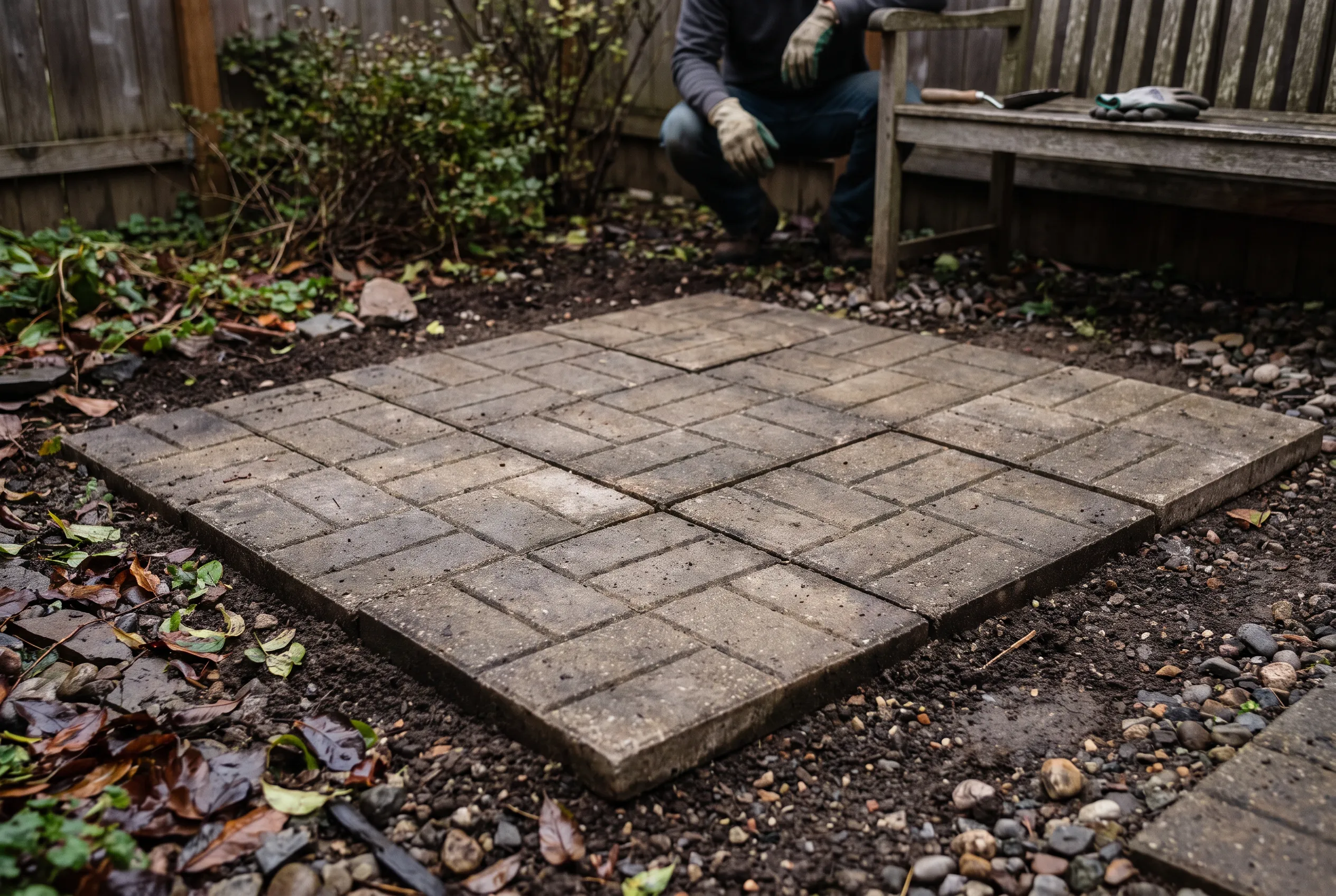
How to plan it
- Get the manufacturer’s pieces-per-square-foot figure
- Sketch borders, curves, and pattern direction
- Apply a visible cut allowance and round to pack size
A practical planning example
For 100 sq ft using pavers that cover 1 sq ft each, an assumed 10% cut allowance gives 110 pieces. If they are sold only in packs of 12, that becomes 10 packs or 120 pieces. Ask the manufacturer for pattern-specific coverage: nominal dimensions, joint spacing and multi-size kits can make a simple rectangle count inappropriate.
Examples explain the decision or calculation. Assumed quantities and rates are not installation specifications.
Turn this into a quantity
Record your site measurements first. Then use a calculator with the depth, application rate, or coverage from the actual material specification.
Open paver calculatorSource and limits
Concrete Masonry & Hardscapes Association: Paver technical guidance. Local conditions and manufacturer guidance may call for different materials or installation details.