By YardHatch · Published · Updated
Estimate only the extra depth the bed needs after assessing the existing layer. Measure different sections separately, keep plant clearances out of the coverage area, and choose the finished depth using guidance suited to the plants and mulch.
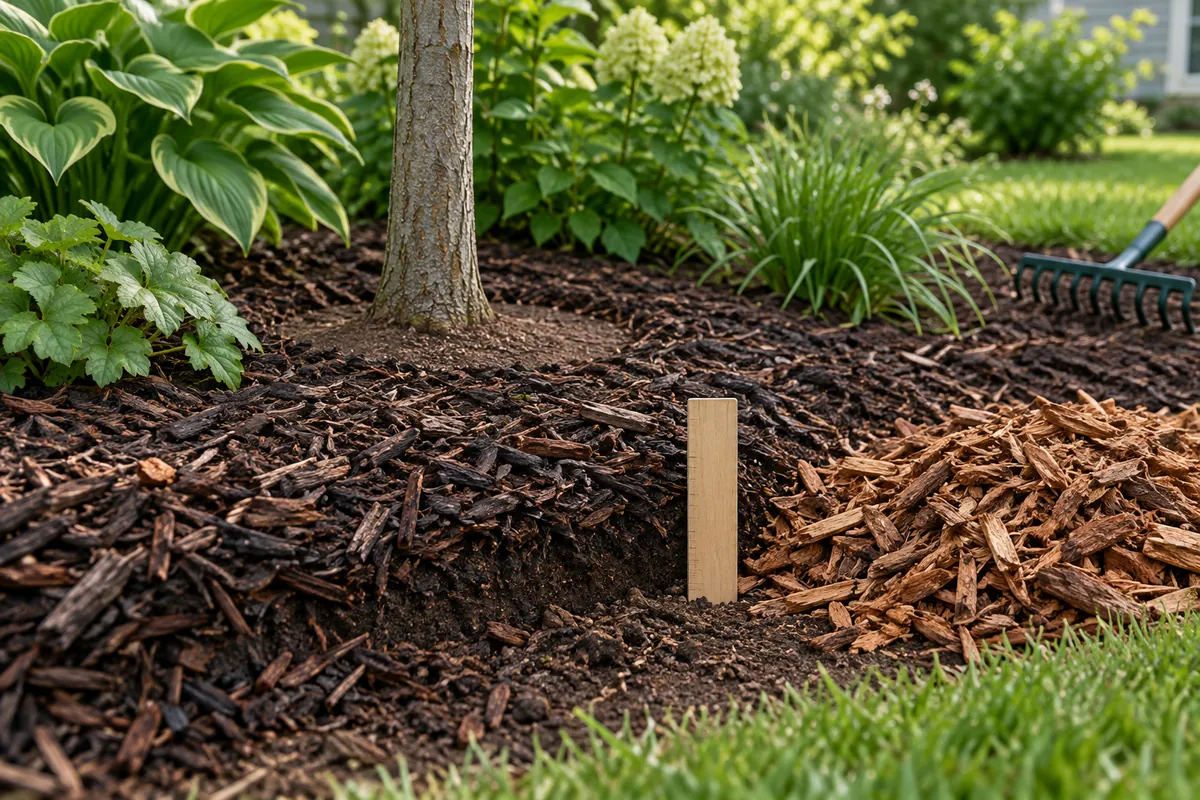
Assess the old layer before placing an order
An existing bed is not an empty box. Inspect the retained mulch at several representative spots and note bare areas, uneven accumulation and locations near plants. This calculation does not decide whether the old material is suitable to keep. If removal is needed, reassess the retained depth after that decision; do not automatically subtract material that will be taken away. Extension guidance and local advice should inform the finished depth and plant clearances. A modeled 3 inch total below is an arithmetic choice, not a blanket recommendation.
Measure the bed and separate unequal areas
Start with the surface that will actually receive material. In this example, a measured 150 sq ft bed has 30 sq ft of exclusions, leaving 120 sq ft to cover. Divide it into a 70 sq ft section and a 50 sq ft section because their retained layers differ. These are hypothetical measurements, not observations from the illustrated scene. Use a sketch or saved sections to keep the two areas nonoverlapping. Plant gaps and paths belong in the exclusions once, not in both the original area and another later adjustment.
| Modeled section | Area | Retained / finish | New depth | New volume |
|---|---|---|---|---|
| A | 70 sq ft | 2 in / 3 in | 1 in | 5.833 cu ft |
| B | 50 sq ft | 0.5 in / 3 in | 2.5 in | 10.417 cu ft |
| Combined | 120 sq ft | Example only | Varies | 16.25 cu ft / 0.602 cu yd |
Calculate the new volume for each section
Suppose the first section retains an estimated 2 inches and the second retains 0.5 inch. If the chosen example finish is 3 inches, the additional depths are 1 inch and 2.5 inches. The first needs 70 × 1 ÷ 12 = 5.833 cubic feet; the second needs 50 × 2.5 ÷ 12 = 10.417 cubic feet. Together they need 16.25 cubic feet, or approximately 0.602 cubic yards. Retained depth is an estimate: if sampling reveals major variation, revise the sections rather than hiding uncertainty in a large unexplained allowance.
Check what a full-depth order would buy
Ordering 3 new inches over the whole 120 sq ft would produce 30 cubic feet, or 1.111 cubic yards. That is 13.75 cubic feet more than the modeled top-up need. This difference is not a guaranteed saving: it depends on the retained layer being suitable and the measurements being representative. Where the retained layer already meets the selected specification, additional depth may be zero. Correct an unsuitable accumulation or maintenance problem using appropriate guidance rather than covering it with another automatic layer.
Combine compatible quantities before rounding
For one product in 2 cubic foot bags, the modeled 16.25 cubic feet requires 9 whole bags, providing 18 cubic feet and 1.75 cubic feet of purchase surplus. Keep the calculation at full precision until you combine compatible sections. Round different products separately. If bulk supply is an option, compare the actual minimum, increment and delivered bill; a fraction of a cubic yard in the calculator is not a promise that the supplier sells that fraction. No bag price or national installation price is assumed.
Keep the assessment with the saved estimate
Save the relevant measurements, retained-depth notes and chosen additional depth in your project. The mulch calculator takes the new layer depth, so do not enter the intended total when some suitable mulch is being retained. Create separate material entries for sections with different additional depths, then combine only matching products for purchasing. Keep the specified gaps around trunks and plant crowns clear. Record the review date and any product guidance used so next season you can reassess the bed rather than reorder the previous quantity unchanged.
Make it your own estimate
These are modeled calculations. Actual products, installation conditions and supplier requirements control your order.
Open the related toolContinue with the project or reference · Compare supplier quotes
Sources and method
University of Minnesota Extension: Mulching for soil and garden health · University of Maryland Extension: Determining the area/size of a practice
The mulch reference is the starting point for plant-clearance and appropriate-use guidance; the area reference supports measurement. Check the current source and local conditions before selecting a finished depth. All section sizes and layer measurements in the table are modeled assumptions.