By YardHatch · Published · Updated
Calculate the surface gravel from the measured path area and a chosen finished depth, then estimate any specified base, edging and delivery separately. Confirm the material and installation specification before deciding how much to buy.
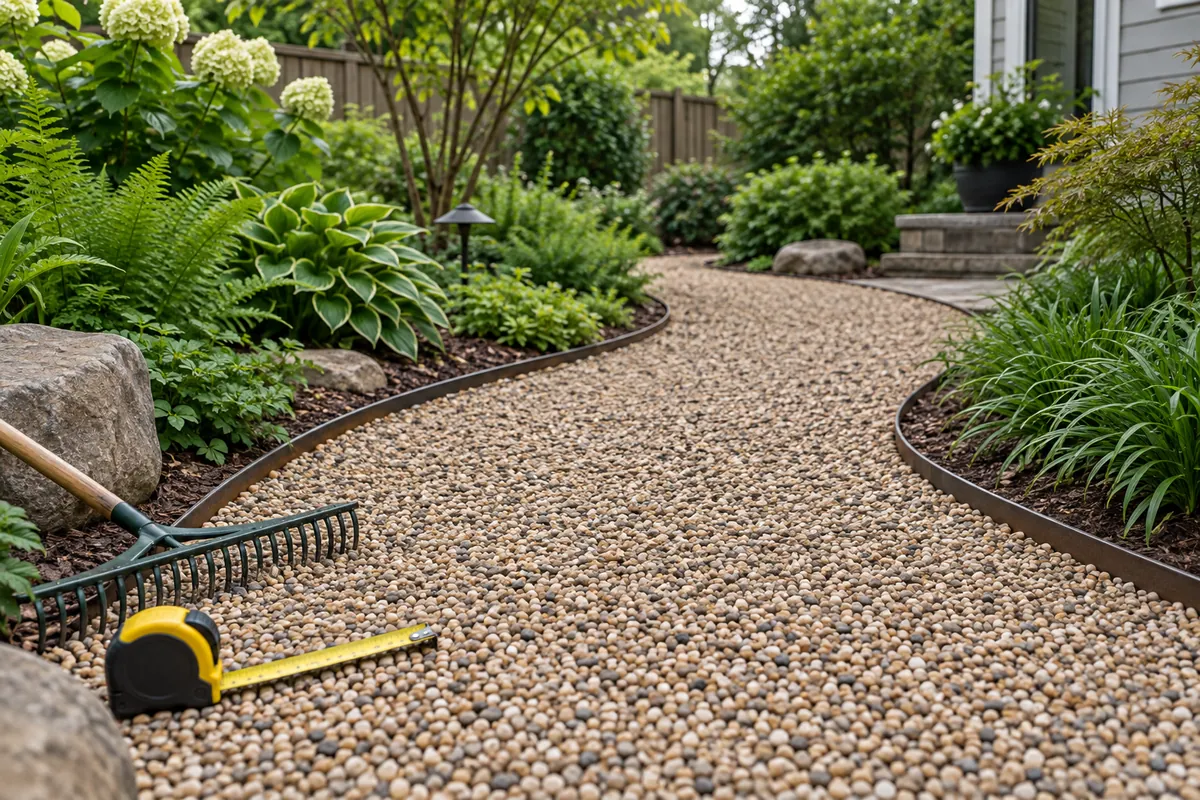
Decide what the path needs before estimating it
A quantity calculation describes a space to fill; it does not select the correct path surface or base. Rounded pea gravel and angular crushed stone behave differently. Discuss the intended foot traffic, slope, drainage, mobility needs and edge restraint with the supplier or an appropriate local professional. Do not assume that decorative surface gravel can replace a specified compacted base. Once the intended system is clear, record each material by its actual grade and buying unit. The illustration on this page is generated, not evidence of an installed YardHatch project.
Measure the surface that will receive gravel
For a straight rectangular example, a 30 ft path that is 3 ft wide covers 90 sq ft. Measure inside the selected edge line. For a curved or tapered path, divide the sketch into small nonoverlapping sections and subtract any permanent areas that receive no gravel. Do not treat a centerline length multiplied by the widest part as an exact measurement. Save the sketch and dimensions in My Yard so later quotes use the same scope.
| Modeled 90 sq ft surface | Volume | 0.5 cu ft bags |
|---|---|---|
| 2 in example | 15 cu ft / 0.556 cu yd | 30 |
| 3 in example | 22.5 cu ft / 0.833 cu yd | 45 |
Run the depth calculation with visible assumptions
The table compares two hypothetical surface depths solely to explain the arithmetic. Neither is an installation recommendation. Volume in cubic feet equals area multiplied by depth in feet; cubic yards equals cubic feet divided by 27. At 2 inches, 90 × 2 ÷ 12 = 15 cubic feet, or about 0.556 cubic yards. At 3 inches the same area needs 22.5 cubic feet, or about 0.833 cubic yards. Use the depth specified for your actual material and path system, and measure what is already present before treating the whole layer as new demand.
Keep edges and supporting layers on separate lines
For the hypothetical 30 × 3 ft rectangle, both long sides total 60 linear feet. Including the two ends makes the perimeter 66 feet; measure actual exposed edges if a wall or existing surface already contains part of the path. Supplier pieces, curves and anchors determine the purchase count. If a base is specified, give it a separate volume and the correct loose-versus-compacted convention. Keep geotextile or drainage components on the checklist only when the chosen design calls for them. Surface gravel volume cannot establish those requirements.
Compare the actual order instead of an advertised unit price
With hypothetical bags labeled 0.5 cubic feet, 15 cubic feet requires 30 whole bags and 22.5 requires 45. If a supplier sells by US ton, request pounds per loose cubic yard for the exact gravel instead of using a universal density. For bulk offers, record the minimum load, selling increment, delivery, tax and unloading conditions. A minimum may increase purchased surplus without changing the path volume. Compare offers only when the grade, quantity convention and included service match; no local market prices are supplied here.
Save a plan you can check on delivery day
Use the pea-gravel calculator for the chosen surface scenario and label the saved item clearly. Record any base as a different item, add the measured edge run, and attach the dated supplier quote. Before confirming, compare the invoice unit and grade with the saved plan and agree on a safe unloading location with the supplier. After the job, note leftover material and changes in the measurement or specification. Those private observations help your next estimate; one project does not establish a universal coverage factor.
Make it your own estimate
These are modeled calculations. Actual products, installation conditions and supplier requirements control your order.
Open the related toolContinue with the project or reference · Compare supplier quotes
Sources and method
University of Maryland Extension: Determining the area/size of a practice · Concrete Masonry & Hardscapes Association: Paver technical guidance
The area reference supports measurement methods; the hardscape reference provides context for specified paving systems, not a universal pea-gravel path detail. Confirm current local and product guidance before choosing a base or surface specification. The table is YardHatch geometry, not field-test or supplier-price data.