By YardHatch · Published · Updated
Use inside dimensions and the intended fill height to calculate the amount to buy. Compare suitable growing media by delivered volume; the cheapest filler is not automatically suitable for the roots or drainage of your bed.
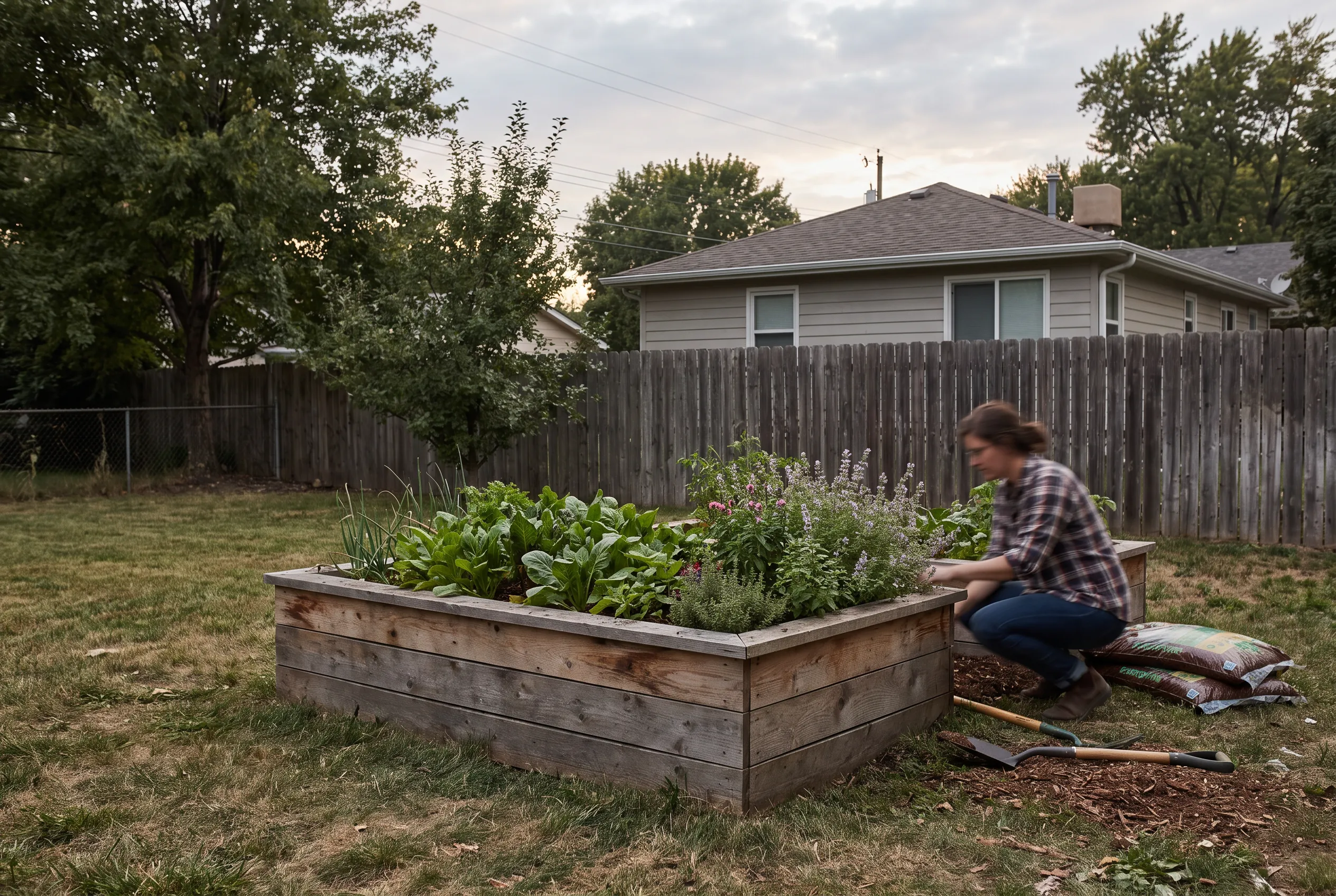
Measure inside the frame
Outside dimensions overstate soil volume when walls are thick. Measure at the planned fill line, allowing for any top clearance. The table assumes rectangular inside dimensions and no internal displacement. If an object occupies volume, measure it separately rather than guessing a discount.
Choose the medium before the price
An open-bottom bed connected to soil differs from a container on pavement. Match the medium to the crop and drainage situation, and use local extension advice or soil testing. This budget exercise does not recommend a universal topsoil-to-compost ratio or hidden filler layer.
| Inside dimensions | Fill height | Volume | 2 cu ft bags |
|---|---|---|---|
| 3 × 6 ft | 10 in | 15 cu ft | 8 |
| 4 × 8 ft | 12 in | 32 cu ft | 16 |
| 4 × 12 ft | 18 in | 72 cu ft | 36 |
Count whole bags at the order level
A 4 × 8 ft bed filled 12 inches deep contains 32 cubic feet. With 1.5 cubic foot bags, 32 ÷ 1.5 = 21.333, so buy at least 22 bags before any justified allowance. Those bags supply 33 cubic feet. With 2 cubic foot bags, 16 supply exactly 32 cubic feet.
Avoid comparing unlike mixes
Record ingredients, intended use, bag volume and delivery costs for every option. A bag quoted by weight cannot be compared to volume without product-specific density. Add settling allowance only when supported by the selected product instructions, and keep it explicit.
Make it your own estimate
These are modeled calculations. Actual products, installation conditions and supplier requirements control your order.
Open the related toolContinue with the project or reference · Compare supplier quotes
Sources and method
University of Minnesota Extension: Soil testing for lawns and gardens provides the relevant background guidance. Worked tables are YardHatch arithmetic using the visible assumptions, not source price data or field observations.