By YardHatch · Published · Updated
A seed bag’s coverage is useful only when it matches your lawn area and the job you are doing. Measure the ground, select the rate for the chosen mixture and decide how whole bags will be used before placing the order.
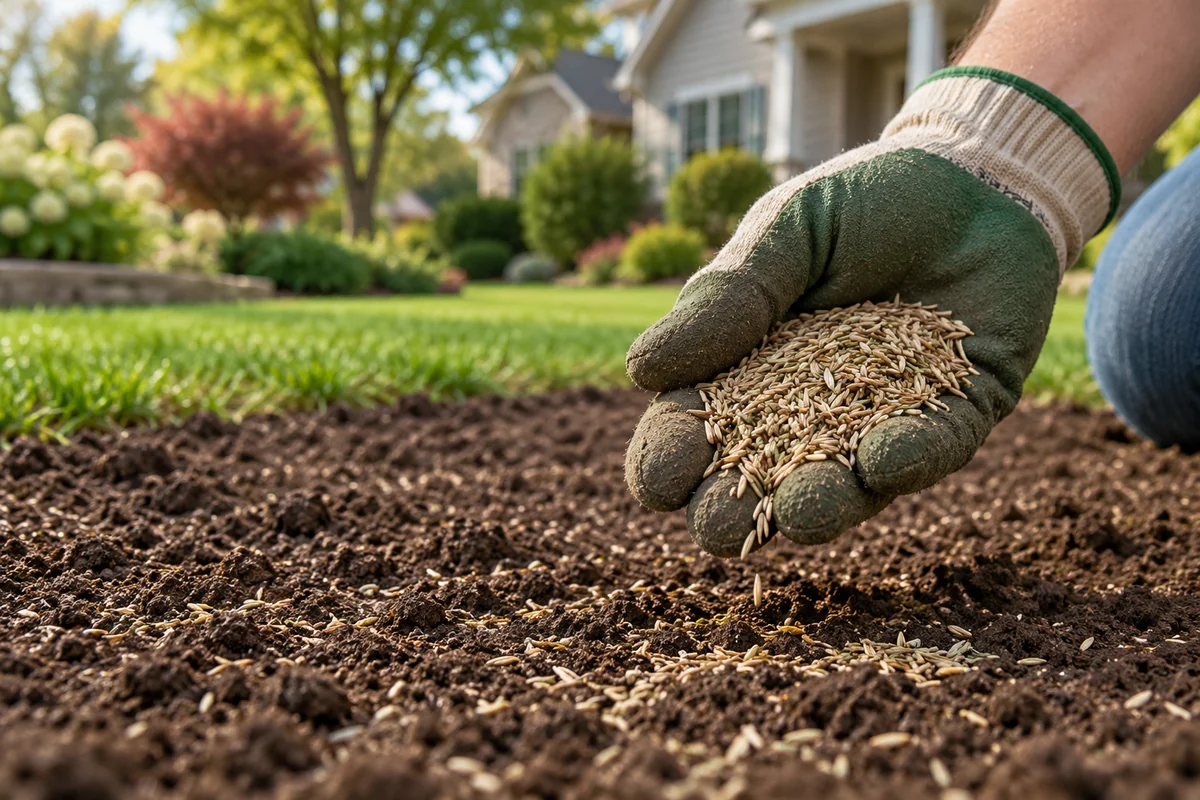
Start with the actual seeded area
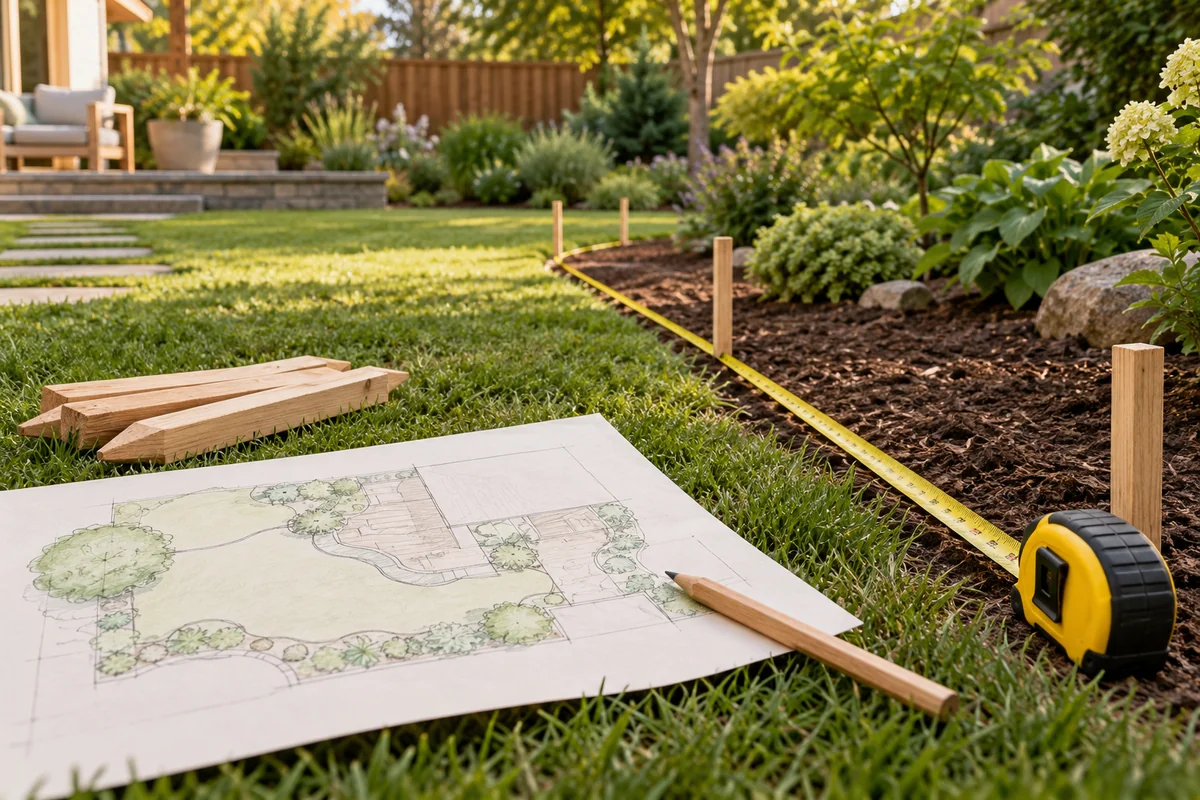
Sketch the lawn and split it into manageable, non-overlapping rectangles or other shapes. Subtract the driveway, beds and other surfaces that will not be seeded. Keep sunny and shaded zones separate if the seed mixture or rate will differ. For a modeled front area of 1,200 square feet and a back area of 1,800, the total to seed is 3,000 square feet.
Match the rate to the job
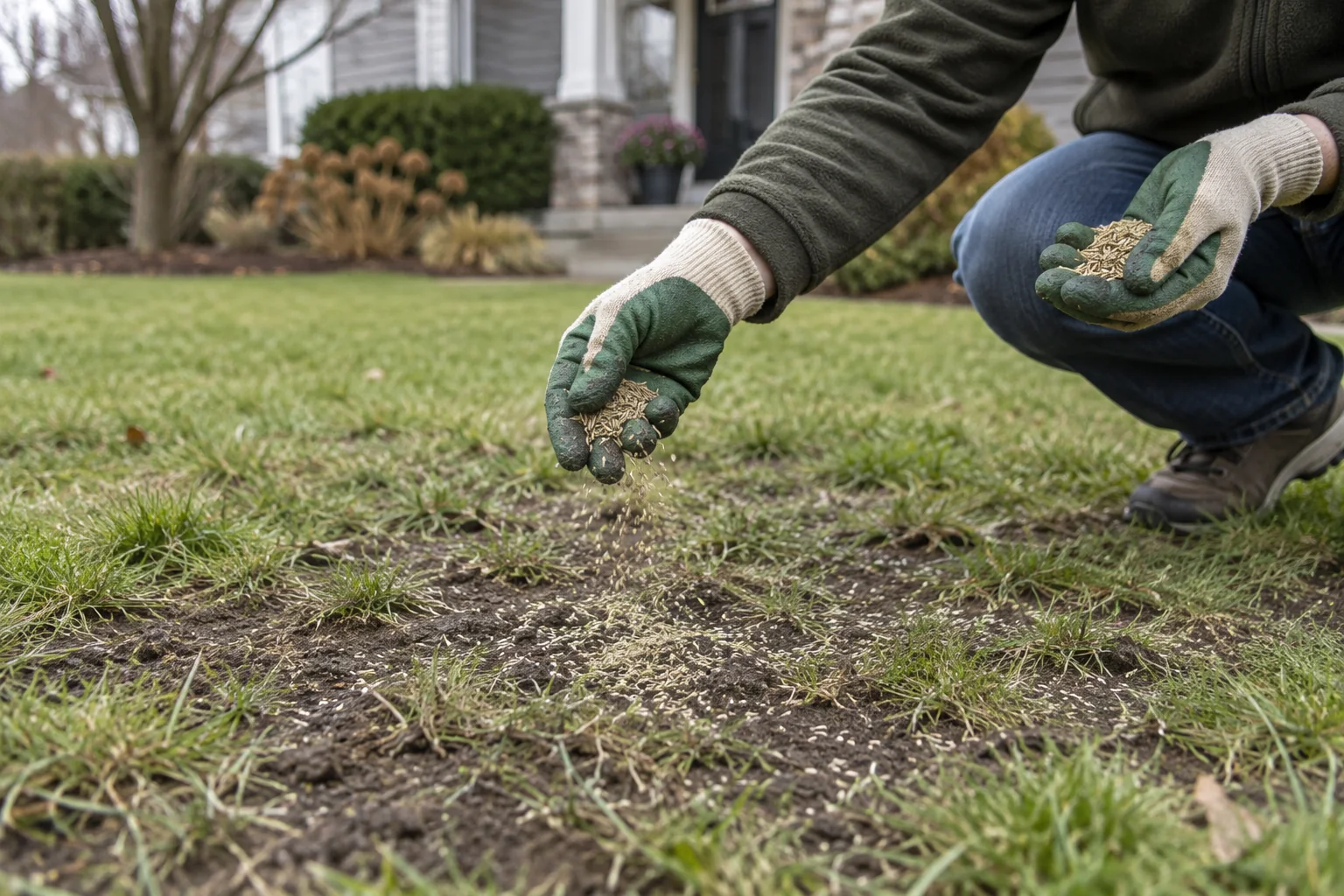
A new lawn and an existing lawn being overseeded may have different recommended rates. Read the label for the actual product, turf species and intended use, then check local extension guidance and the planting window. Do not apply a new-lawn rate to an established lawn simply because the bag quotes a larger coverage figure.
Worked example: buying seed for 3,000 square feet
All rates, package sizes and quantities are hypothetical examples.
| Planning step | Illustrative result |
|---|---|
| Front plus back lawn | 1,200 + 1,800 = 3,000 sq ft |
| Chosen product rate | 4 lb per 1,000 sq ft |
| Calculated application | 12 lb |
| Whole 5 lb bags | 3 bags, supplying 15 lb |
| Unapplied quantity | 3 lb before spills or other uses |
Work the numbers before buying
Suppose a product recommends 4 pounds per 1,000 square feet for the selected use. The modeled 3,000-square-foot lawn needs 3 × 4 = 12 pounds. If the product is sold in 5-pound bags, three bags provide 15 pounds; that is 3 pounds more than the calculated application, not an instruction to spread the surplus. This rate is an arithmetic example, not a recommended rate for every seed.
Read the label beyond the weight
Compare the grass species and cultivars, purity and germination information, test date, and any coating as described on each product’s label. Two 5-pound bags may differ in mixture and stated coverage. Penn State’s guide explains what seed labels can tell you; use its context alongside the specific product instructions.
Plan the work and keep a record
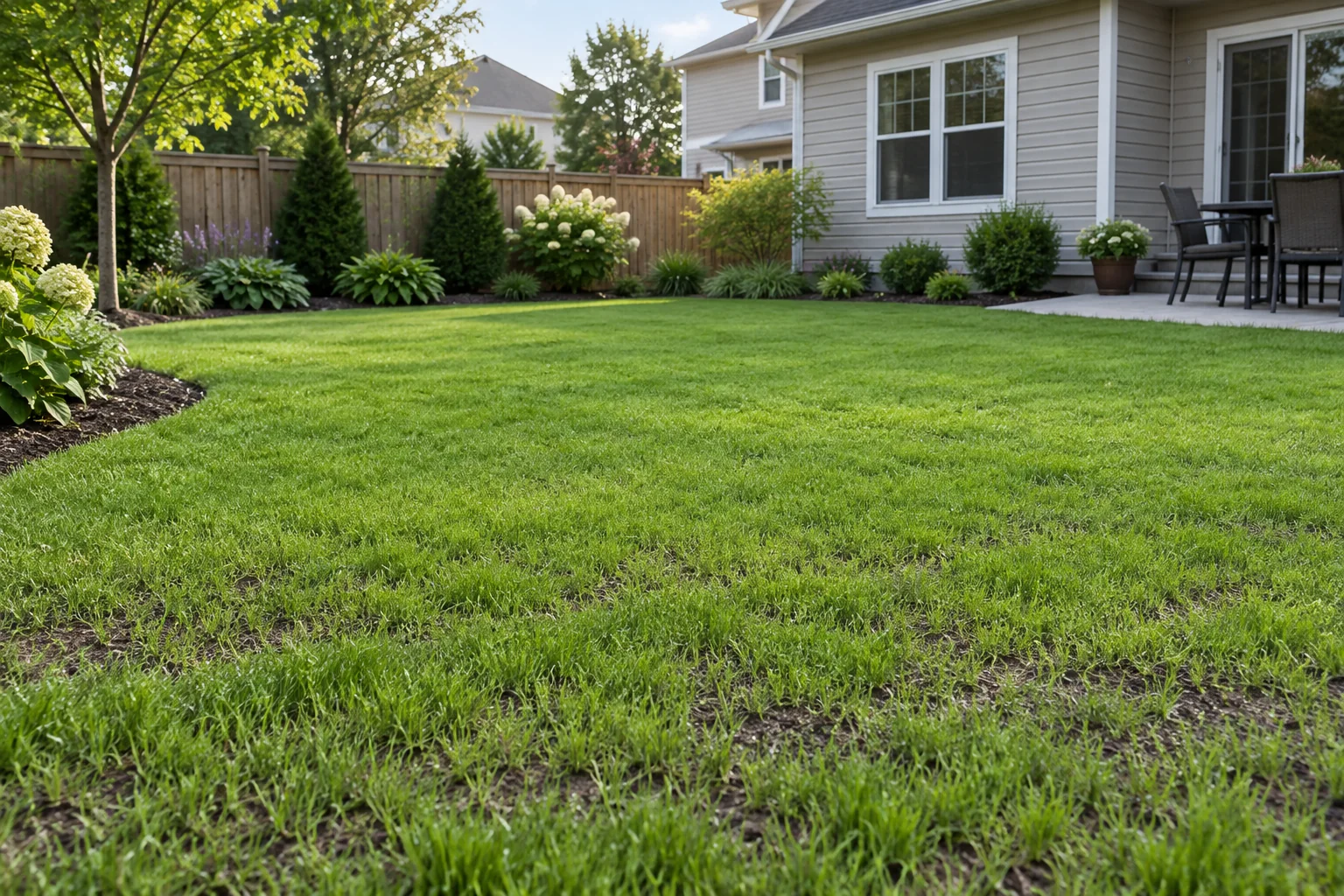
Confirm seed-to-soil contact, irrigation, equipment and local restrictions before ordering. Calibrate the spreader for your seed and setting rather than assuming the numbers are interchangeable between models. Record the measured area, label rate, calculated amount and any unopened surplus so you can check the purchase later.
Compare coverage claims with the same application rate
If one package claims 2,500 square feet and another claims 5,000, check whether both figures describe new seeding or overseeding. Coverage figures can refer to different rates and uses. Convert each relevant rate into pounds per 1,000 square feet and write the matching scenario beside it. The advertised number is not a substitute for the product-specific label, and the most coverage per dollar is not necessarily the right seed for your climate or light conditions.
Estimate a separate shaded section
Suppose 400 of the modeled 3,000 square feet needs a shade-appropriate mixture at a hypothetical 3 pounds per 1,000 square feet, and the remaining 2,600 square feet uses the original example rate of 4 pounds. Calculate the sunny portion as 2.6 × 4 = 10.4 pounds and the shaded portion as 0.4 × 3 = 1.2 pounds. Round the products separately because they are different mixtures. These rates illustrate how to split an order; they are not advice to plant those mixtures or rates at your site.
Prepare for even application and storage
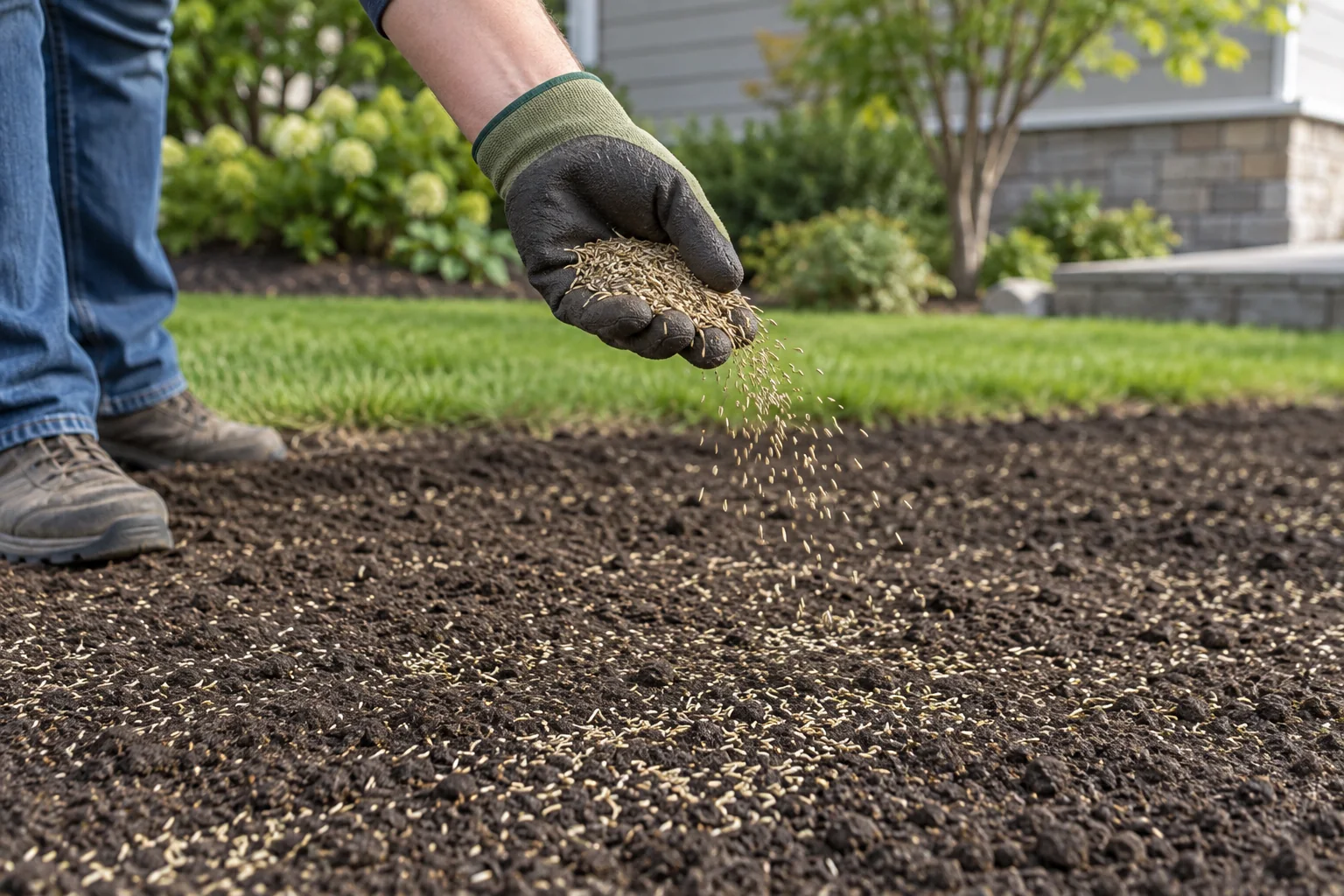
Before applying seed, check that the surface is prepared and seed can contact the soil. Penn State describes dividing the intended amount in two and making perpendicular passes, with the spreader calibrated to apply half the target rate on each pass. Keep seed away from paved areas and waterways, and follow local restrictions and the label. If you have unopened seed left, follow the package’s storage guidance and retain its label and test date; stored seed should not be treated as indefinitely unchanged.
Before you buy
- Net area excludes hardscape and areas using different seed.
- Product and rate match new seeding or overseeding.
- Whole bags are rounded by product, with surplus recorded.
- Spreader, preparation, irrigation and local planting window are planned.
Questions and answers
Does a five-pound bag cover the same area for every lawn?
No. The applicable rate differs by product, grass type and whether you are establishing or overseeding. Use the appropriate label instruction, then multiply by measured area.
Should I apply the extra seed from the last bag?
Not automatically. An order may exceed the calculated application because bags come in whole units. Apply the selected rate and keep the difference separate.
Can I calculate coverage from purity or germination alone?
Not reliably. Seed labels provide useful quality information, but a complete seeding recommendation also depends on species, the job and the rate basis. Penn State explains pure live seed; consult the label or local specialist before changing a rate.
Should I seed a deeply shaded area at a higher rate?
First address whether the chosen grass can thrive under the site conditions. More seed does not fix a poor match with light, soil, traffic or water. Consider local advice and alternatives if turf is unsuitable.
Make it your own estimate
These are modeled calculations. Actual products, installation conditions and supplier requirements control your order.
Open the related toolContinue with the project or reference · Compare supplier quotes
Sources and method
Penn State Extension: Lawn establishment · Penn State Extension: Turfgrass seed and mixtures · University of Maryland Extension: Starting a new lawn
The references provide background, not a tested YardHatch installation or supplier quote. Worked quantities use the stated assumptions and are not product recommendations.