By YardHatch · Published · Updated
A contrasting border can change both the field area and the number of pavers to buy. Sketch the outside dimensions first, then calculate the border and center as separate, non-overlapping surfaces.
Define the outside edge
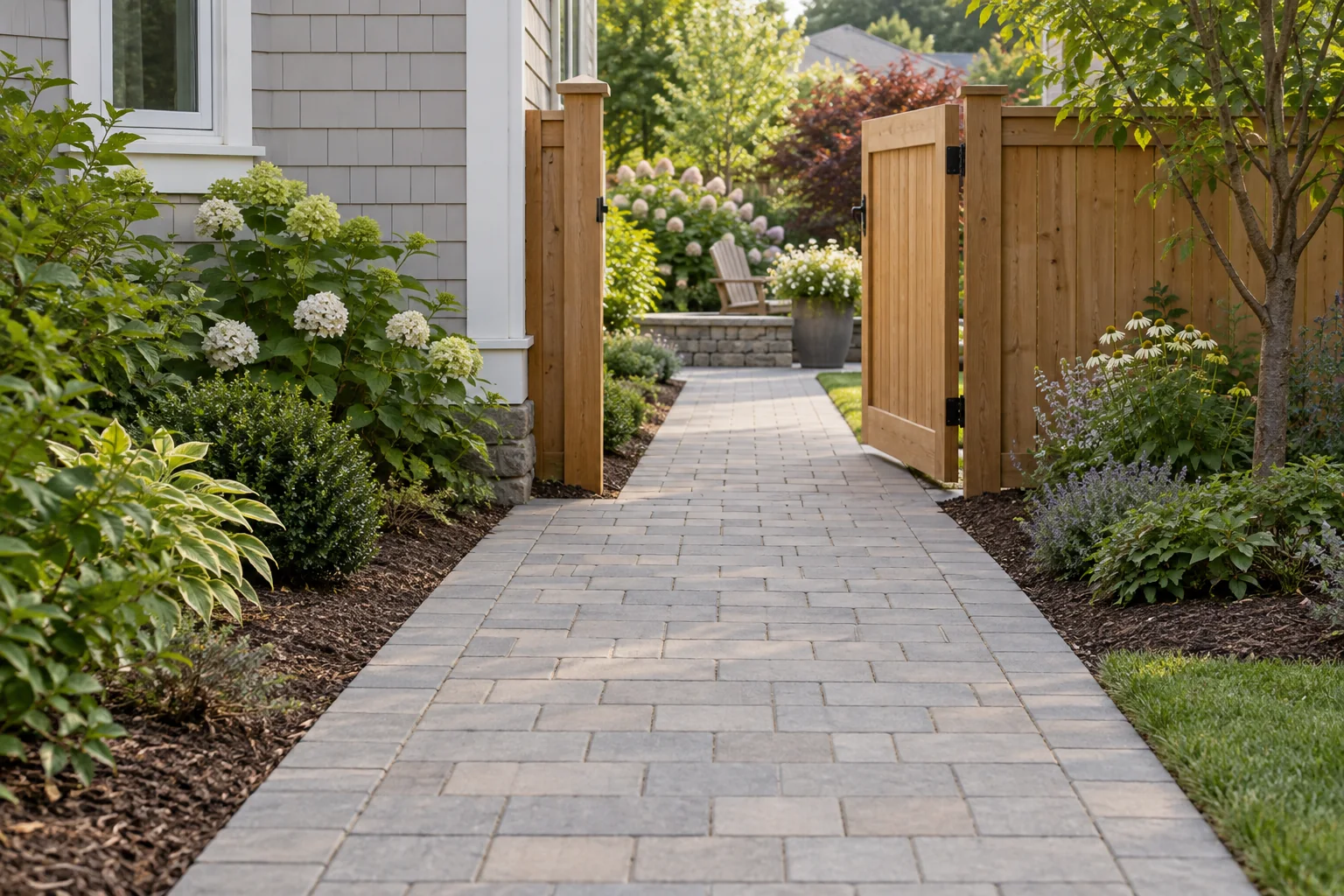
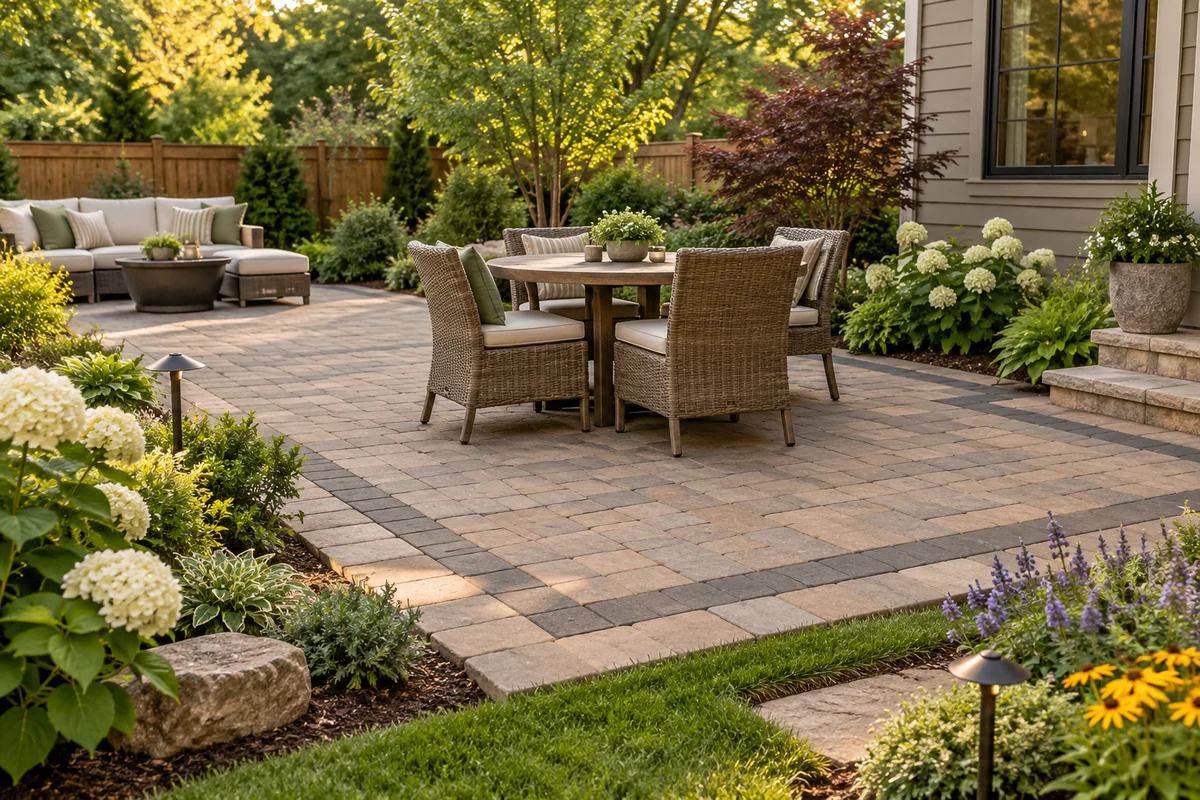
Suppose the finished rectangular patio measures 12 by 10 feet on the outside. Its total surface is 120 square feet. Those outside dimensions include the border in this example. Record door clearances, drainage and site constraints; these calculations do not specify the patio’s structural design.
Subtract the center once
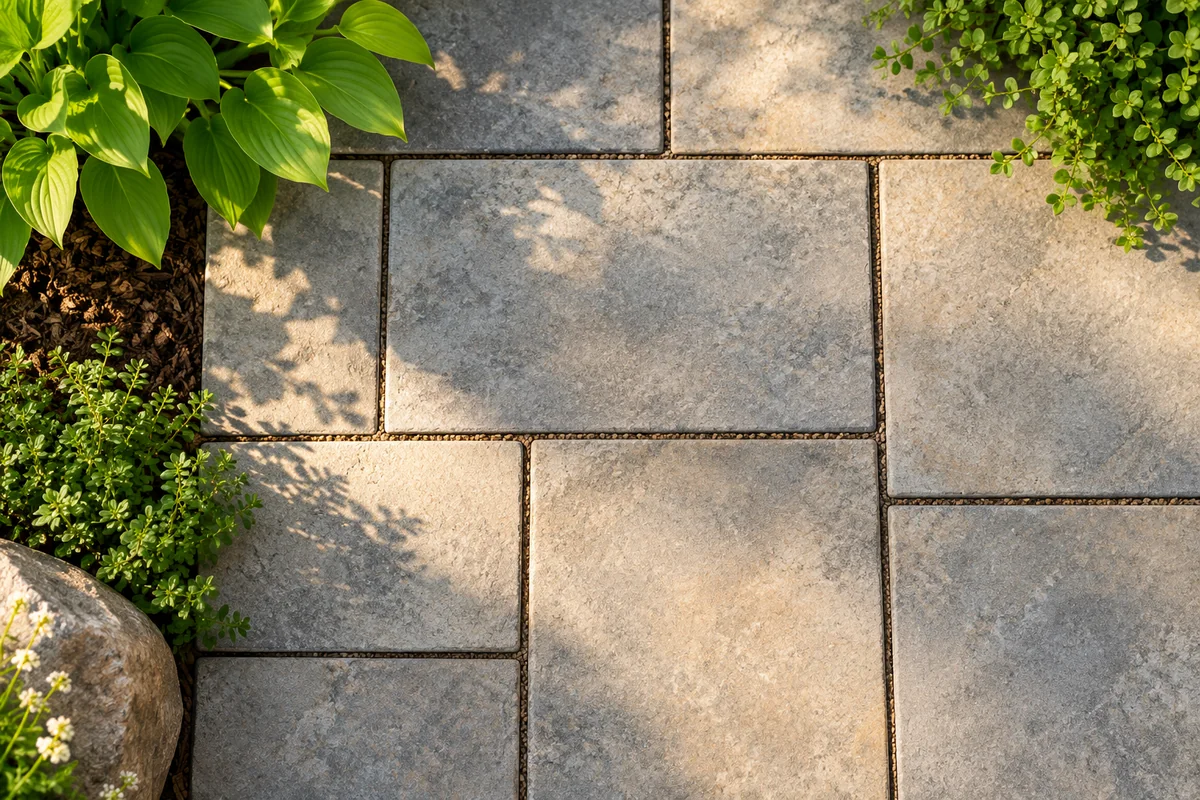
For a modeled 1-foot-wide border on all four sides, the central field is 10 by 8 feet, or 80 square feet. Border area is total area minus field area: 120 − 80 = 40 square feet. Do not add 40 square feet to a field quantity already calculated using the full 120 square feet. Actual widths depend on the product, joints and pattern.
Worked example: field and border stay separate
All rates, package sizes and quantities are hypothetical examples.
| Planning line | Modeled quantity |
|---|---|
| Outside patio | 12 × 10 = 120 sq ft |
| Border width on every side | 1 ft |
| Interior field | 10 × 8 = 80 sq ft |
| Border area | 120 − 80 = 40 sq ft |
| Field with illustrative 10% cutting allowance | 88 sq ft |
| Border with illustrative 10% cutting allowance | 44 sq ft |
Convert each area using its own product
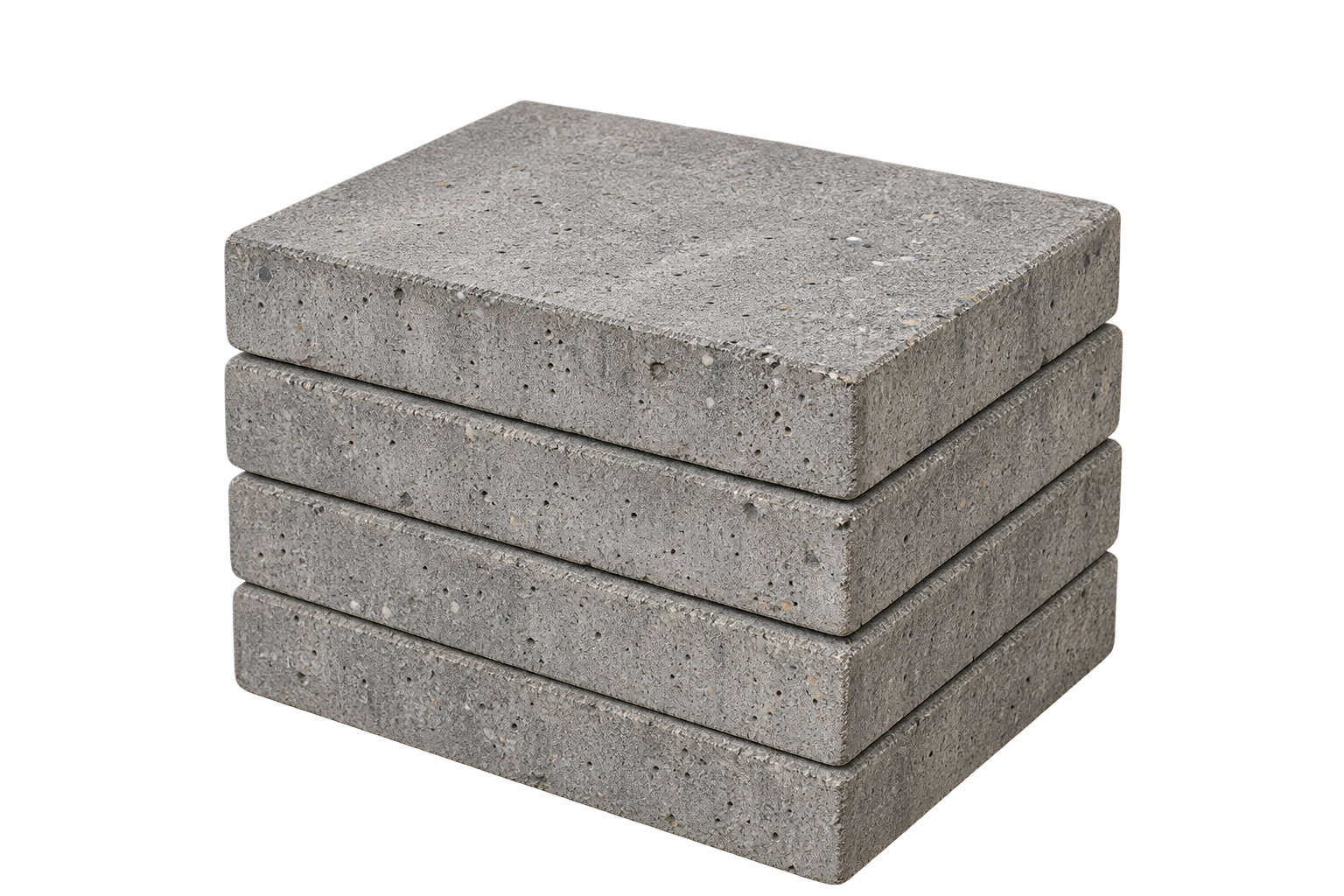
If a border product is sold by coverage, divide the 40-square-foot border area by the supplier’s stated coverage per pack. Calculate the center separately using its own product. A modeled 10% allowance for cuts would make the border order target 44 square feet and the field target 88 square feet, before pack rounding. The allowance is illustrative; confirm the pattern and project-specific waste with the installer or supplier.
Keep the supporting layers independent
The paver surface, bedding, base and edge restraint are separate components. The border’s color does not necessarily change the base area, but the approved edge detail and site conditions determine what is required. Use the same outside footprint for shared layers unless the design says otherwise, and confirm the specifications with an appropriate professional.
Ask suppliers the same questions
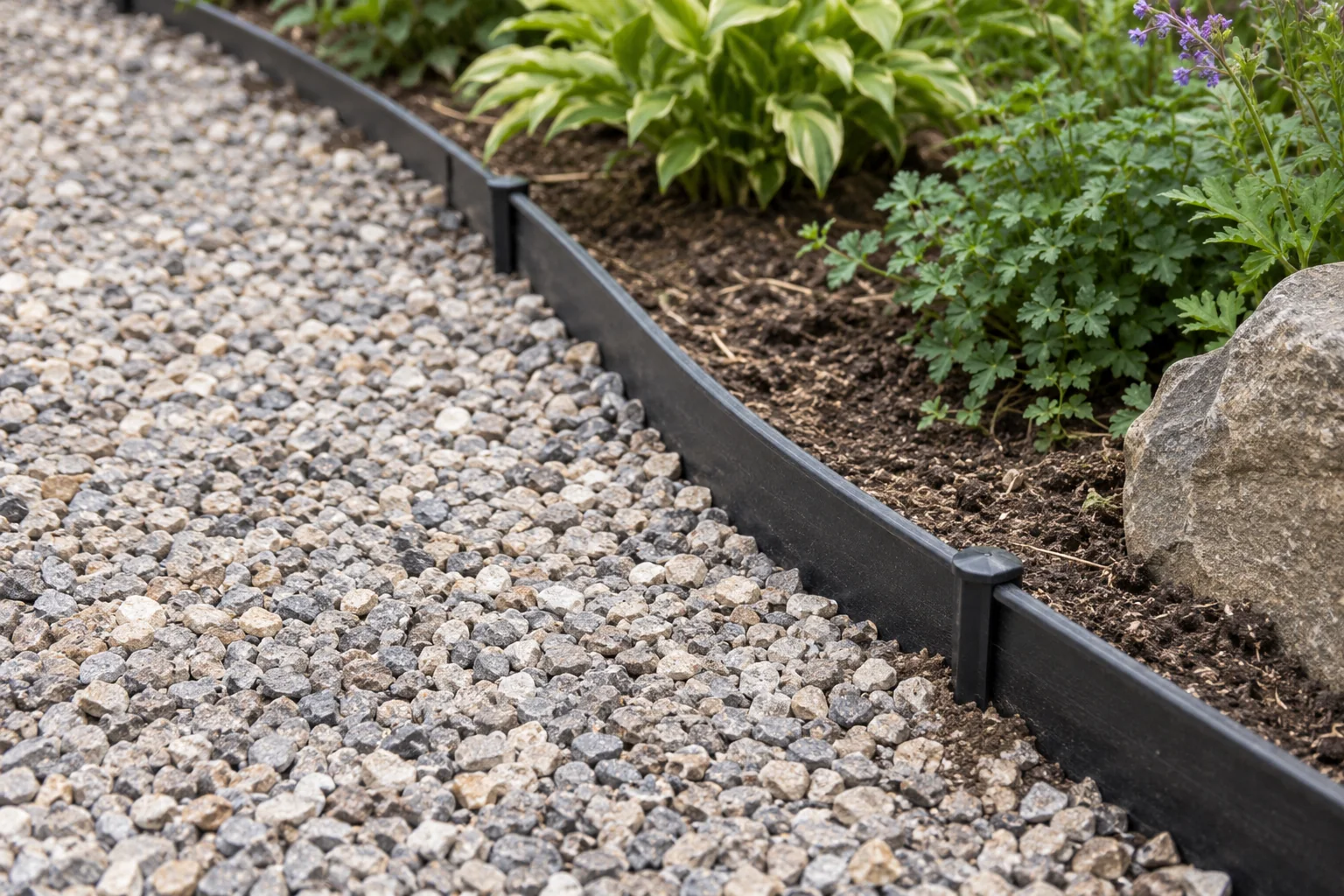
Compare exact paver dimensions and pack coverage, availability, partial-pack rules, breakage, delivery and unloading. Ask whether quotes include cutting, joint material, edge restraints, excavation and disposal. Keep a dimensioned sketch and the modeled allowance with the order so both suppliers are pricing the same design.
Check the measurements against the layout
Subtract the border width from both sides of each outside dimension. That is why a 12-foot outside length with a one-foot border at each end leaves 10 feet inside, not 11. If a border exists on only some sides, subtract only the sides that actually receive it. For a nonrectangular outline, break the field and border into non-overlapping shapes or ask an installer for a measured takeoff. Allow for joint widths and the manufacturer’s actual dimensions when finalizing the pattern.
Convert coverage to packs without hiding surplus
Suppose, solely for illustration, border pavers are packaged at 12 square feet per pack and field pavers at 20 square feet per pack. The modeled 44-square-foot border target needs four complete packs, providing 48 square feet. The 88-square-foot field target needs five packs, providing 100 square feet. The purchased surplus is therefore 4 square feet of border and 12 square feet of field material above the respective targets. Actual pack coverage and cutting allowance must come from the chosen products.
Separate the installation scope from the paver order
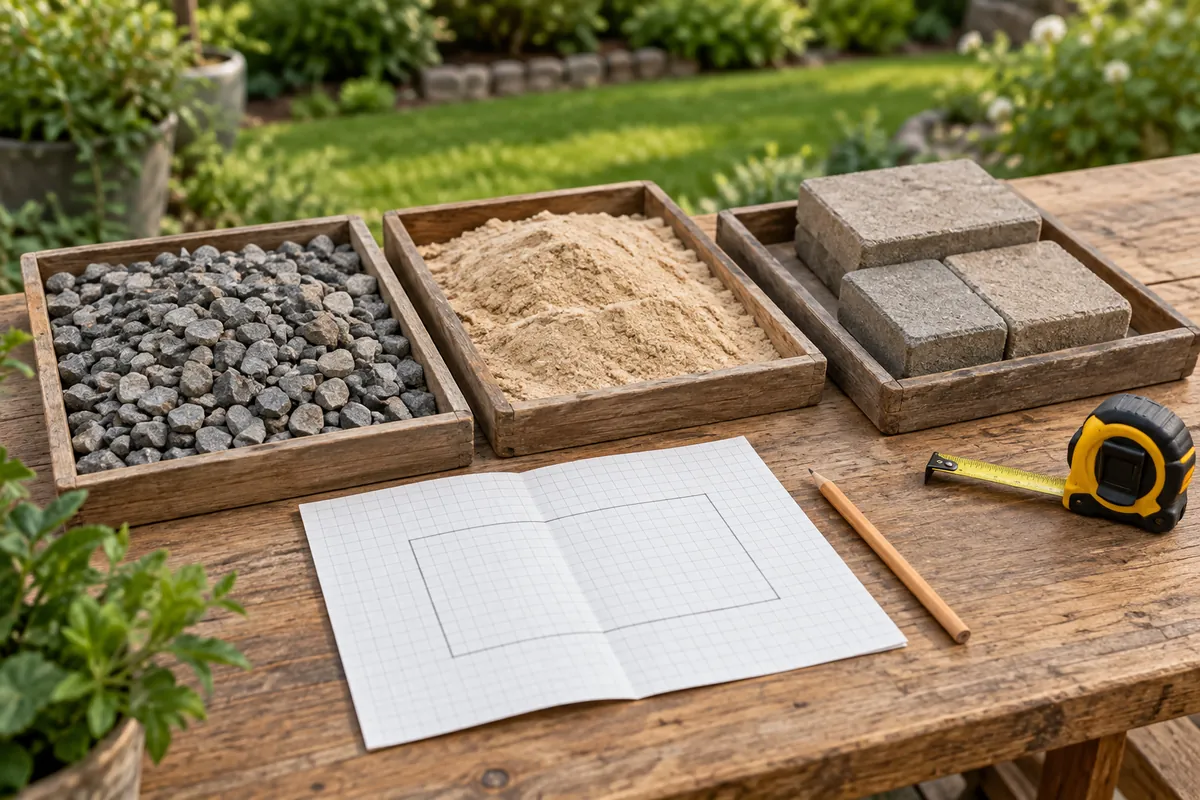
A complete patio can require excavation, base, bedding, pavers, joint material, edge restraint and disposal or restoration. Record these as separate quote lines. Quantities and layer designs depend on traffic, soil, climate, drainage and the selected system. A supplier’s paver coverage is not a guarantee about base thickness, compaction, slope or edge details. Seek a qualified installer or relevant local guidance for the design before purchasing.
Before you buy
- Outside dimensions include the border only once.
- Border and field have separate product coverage.
- Joint width, pattern and cutting allowance are specified.
- Base, bedding, edges and installation are itemized.
Questions and answers
Do I add the border on top of the full patio area?
Only if the stated dimensions describe the field without a border. If they describe the outside patio, the border is already inside that footprint.
Why is the field length reduced twice the border width?
A border on both ends occupies width at each end. For the rectangular example, subtract one width from the left and one from the right.
Should I round field and border pavers together?
No. If they are different products, calculate and round their packs separately. Confirm partial-pack sales before ordering.
Does the 10% allowance cover every pattern?
No. It is an example used for transparent arithmetic. An installer or supplier should advise on the actual pattern, cuts and expected breakage.
Make it your own estimate
These are modeled calculations. Actual products, installation conditions and supplier requirements control your order.
Open the related toolContinue with the project or reference · Compare supplier quotes
Sources and method
University of Maryland Extension: Determining area and size · Concrete Masonry & Hardscapes Association: Paver technical guidance
The references provide background, not a tested YardHatch installation or supplier quote. Worked quantities use the stated assumptions and are not product recommendations.